



Cancer remains a major health concern for women, and the importance of early detection cannot be overstated. Cancer screening blood tests for females offer an efficient way to detect signs of cancer even before symptoms appear. These tests can identify cancerous cells or abnormal substances in the blood, providing valuable insight into a person’s health. In this blog, we will explore the significance of cancer screening blood tests for females, the different types of screening available, and how these tests can help detect various cancers early. Early cancer detection blood tests can dramatically improve treatment outcomes and potentially save lives.
Screening Tests
Cancer screening tests, particularly blood tests, are designed to find signs of cancer in the body before it has spread or caused noticeable symptoms. Cancer screening blood tests for females help detect cancers such as breast, cervical, colorectal, lung, and others. These tests play a critical role in ensuring that cancer is caught in its early stages when it is most treatable.
In some cases, blood tests are combined with imaging or physical exams to improve the accuracy of diagnosis. For example, blood test for breast cancer detection are often paired with mammograms to provide a comprehensive assessment. Similarly, a blood test to detect lung cancer can be combined with low-dose CT scans to increase detection in individuals at high risk.
Symptoms of Cancer
Recognizing early signs and symptoms of cancer can help women know when to seek cancer screening blood tests for females. Common symptoms that may prompt screening include:
- Persistent fatigue
- Unexplained weight loss
- Changes in the skin, such as new moles or changes to existing moles
- Lumps or swelling in the body
- Persistent cough or shortness of breath
- Unexplained bleeding or bruising
If any of these symptoms are present, it is important to consult with a healthcare provider to determine if further cancer screening tests for females are necessary.
Does Every Cancer Have Symptoms?
Not every cancer has noticeable symptoms in its early stages. Many cancers remain silent, making early detection essential. Common signs like fatigue, weight loss, or unexplained pain can often be mistaken for less serious conditions. This is why cancer screening tests for females are crucial—they help detect cancer before it becomes symptomatic.
- Cancers without early symptoms: Ovarian, pancreatic, and some blood cancers.
- Cancers with mild early symptoms: Breast, cervical, and colorectal cancer.
Screening tests, such as early cancer detection blood tests, help uncover these silent threats.
Types of Blood Tests for Cancer
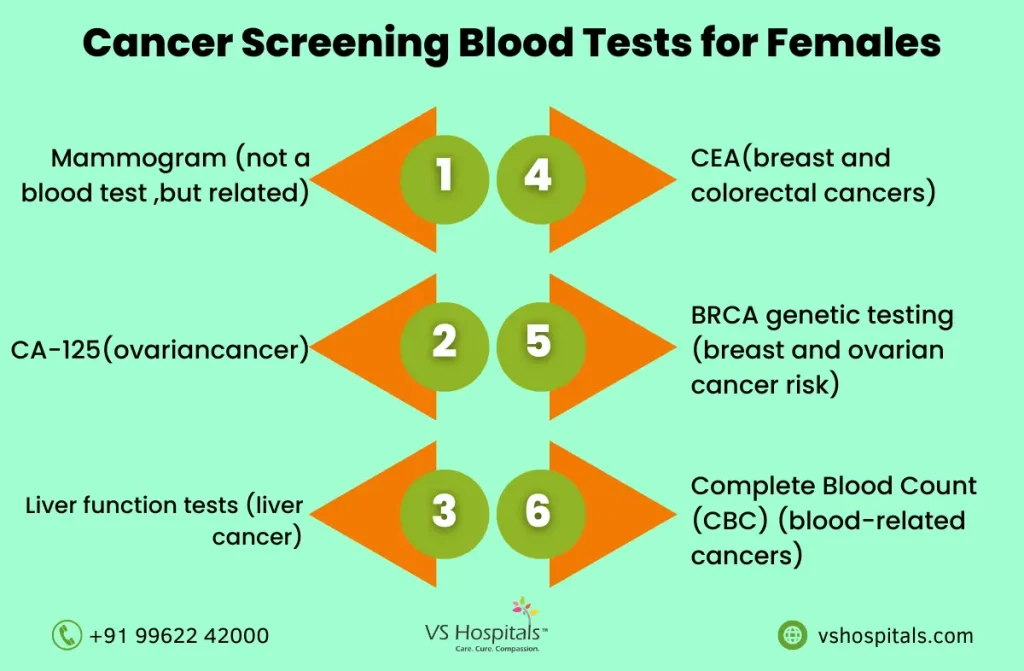
- Complete Blood Count (CBC): This test measures the number of blood cells and can help detect cancers like leukemia.
- Tumor Marker Tests: Tumor markers, such as PSA (prostate cancer) and CA-125 (ovarian cancer), can indicate certain cancers.
- Blood Protein Tests: These detect abnormal proteins produced by cancer cells.
- Circulating Tumor Cells Test: Detects cancer cells in the bloodstream, often used for monitoring.
- Genomic Testing: Identifies mutations linked to cancer growth.
Does Early Cancer Show in Blood Work?
Yes, certain cancers can be detected early through blood tests. While routine blood work may not always reveal early-stage cancer, specialized cancer screening blood tests for females, such as tests for specific tumor markers, can provide early warning signs. For instance, markers like CA-125 for ovarian cancer or mammaglobin for breast cancer may be used as part of early detection strategies. Regular screenings help in identifying risks before symptoms appear.
Recommended Cancer Screening Tests
There are a variety of screening tests available for different types of cancer. The most common cancers affecting women include breast cancer, cervical cancer, colorectal cancer, and lung cancer. Each type has specific recommended screening tests to detect early signs.
Breast Cancer Screening
Breast cancer is one of the most common cancers among women. Along with regular screening, understanding breast cancer foods to avoid can also play a supportive role in overall health. Regular mammograms are the gold standard for breast cancer screening, but blood tests for breast cancer detection are also available. These tests look for specific markers in the blood, such as BRCA1 and BRCA2 mutations, which may indicate a higher risk of developing breast cancer.
Cervical Cancer Screening
Cervical cancer can be detected early with regular Pap smears and HPV tests. These tests look for changes in the cells of the cervix that may indicate the presence of cancer or precancerous lesions. Routine screenings for cervical cancer are recommended for women starting at age 21 and can significantly reduce the risk of developing advanced cancer.
Colorectal Cancer Screening
Colorectal cancer screening typically involves a colonoscopy or stool-based tests, such as the FIT (Fecal Immunochemical Test). However, blood tests like the CEA (Carcinoembryonic Antigen) test can help monitor people with colorectal cancer and assess the effectiveness of treatment. Early detection through these screening methods can catch cancer in its initial stages, which improves the chances of successful treatment.
Lung Cancer Screening
For women at high risk of lung cancer—especially smokers—blood test to detect lung cancer, along with low-dose CT scans, are essential. These tests can detect abnormal markers in the blood that may indicate lung cancer.
Skin Cancer Screening
Skin cancer is one of the most common cancers in females, and early detection significantly improves outcomes. Regular self-examinations and dermatological check-ups help identify unusual changes such as new moles, irregular growths, or changes in existing spots. While skin cancer typically doesn’t require blood tests for detection, comprehensive cancer screening blood tests for females can complement other methods by identifying markers related to melanoma and other cancers.
Other Screening Tests
In addition to the primary cancer screening blood tests for females mentioned above, several other blood tests and exams can help detect various types of cancer in females:
Complete Blood Count (CBC)
A CBC measures different components of your blood, including white blood cells, red blood cells, and platelets. Abnormalities in these counts may indicate the presence of blood cancers such as leukaemia.
Alpha-fetoprotein Blood Test
This test is typically used to detect liver cancer but may also indicate certain ovarian or testicular cancers. It measures levels of alpha-fetoprotein, which can become elevated in the presence of tumors.
Breast MRI
For women with a high risk of breast cancer, a breast MRI may be recommended alongside mammograms. An MRI provides detailed images of breast tissue and can detect abnormalities that a mammogram might miss.
CA-125 Test
The CA-125 blood test measures the level of a protein that can be elevated in women with ovarian cancer. It is primarily used to monitor treatment or detect recurrences, but it may also be used in women at high risk for ovarian cancer.
Clinical Breast Exams and Regular Breast Self-exams
While not blood tests, clinical breast exams performed by a healthcare provider and regular breast self-exams are important tools for early detection. Women should perform monthly self-exams and consult their doctor if they notice any unusual changes.
Multi-cancer Detection Tests
These tests use a single blood sample to detect multiple types of cancer at once. This type of screening is relatively new but shows promise in improving early detection rates for various cancers, especially when used alongside traditional tests.
PSA Test
While primarily used to detect prostate cancer in men, the PSA (Prostate-Specific Antigen) test may have potential uses for detecting certain cancers in women, although more research is needed in this area.
Skin Exams
Skin exams are essential for detecting skin cancers, such as melanoma. These exams, conducted by a dermatologist or through self-examination, help catch abnormalities in the skin before they progress.
Transvaginal Ultrasound
A transvaginal ultrasound provides detailed images of a woman’s reproductive organs, which can help detect ovarian cancer or uterine abnormalities. This test is often paired with blood tests to ensure accurate detection.
Virtual Colonoscopy
A virtual colonoscopy is a non-invasive test that uses CT scans to check for polyps or other abnormalities in the colon. This test offers an alternative to traditional colonoscopies for colorectal cancer screening.
Risk Factors of Cancer
Certain risk factors increase a woman’s chance of developing cancer. These include:
- Family history of cancer (especially breast, ovarian, or colon cancer)
- Age (risk increases as you get older)
- Lifestyle factors (smoking, excessive alcohol consumption, poor diet)
- Obesity or lack of physical activity
- Exposure to harmful chemicals or radiation
- Chronic infections such as HPV or Hepatitis B
- Hormonal changes, especially those related to menopause
Understanding these risk factors can guide women in making informed decisions about early cancer detection blood tests and other preventive measures.
Diagnosis and Treatment
Effective cancer treatment begins with accurate diagnosis, which often involves a combination of blood tests, imaging studies, and biopsies. For females, cancer screening blood tests such as:
- CA-125: Used to detect ovarian cancer.
- BRCA Gene Testing: Evaluates genetic predisposition to breast or ovarian cancers.
- Alpha-Fetoprotein (AFP): Screens for liver or ovarian cancer.
- Hormone Receptor Tests: Detect hormonal imbalances linked to breast cancer.
Once cancer is diagnosed, personalized treatment plans may include surgery, chemotherapy treatment, radiation therapy, or targeted therapies. Early cancer detection blood tests can significantly improve treatment success rates.
Do Complete Blood Count (CBC) Tests Detect Cancer?
A Complete Blood Count (CBC) is a standard diagnostic tool but not a definitive cancer screening test. However, it can identify abnormalities such as:
- Unusual white blood cell (WBC) counts: Could indicate leukemia.
- Low red blood cell (RBC) levels: Might signal blood cancers or anemia from chronic conditions like colorectal cancer.
While a CBC can hint at cancer, confirmatory cancer screening blood tests for females, such as tumor marker tests or biopsies, are necessary for a precise diagnosis.
Conclusion
Cancer screening blood tests for females are vital in catching cancer early, when treatment is most effective. Regular screenings provide the best chance for early detection and successful outcomes. Every woman should be proactive about her health by discussing cancer screening tests for females with her healthcare provider. Early intervention through blood test for breast cancer detection or blood test to detect lung cancer can make all the difference in the fight against cancer.