




The main difference between an obstetrician and a gynecologist is their focus. An obstetrician cares for women during pregnancy, childbirth and the weeks after delivery, while a gynecologist cares for the female reproductive system at every stage of life, including periods, contraception, fertility, infections and menopause. In India, most doctors are trained in both fields and practise as obstetrician-gynecologists (OB-GYNs). This guide covers the difference between obstetrician and gynecologist, their training, and when to see each.
What is a Gynecologist?
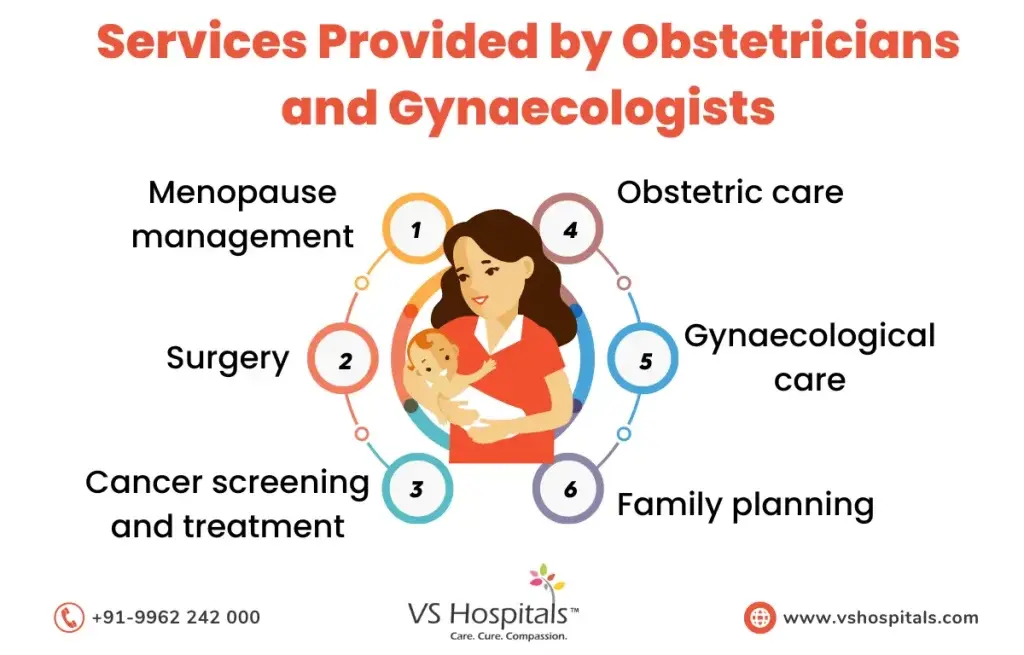
A gynecologist is a doctor who specialises in the health of the female reproductive system, which includes the uterus, ovaries, fallopian tubes, cervix, vagina and vulva. Gynecologists diagnose and treat conditions of these organs and provide preventive care at every age, from adolescence to menopause and beyond. Their work includes:
- Evaluation and treatment of menstrual problems such as irregular, heavy or painful periods
- Diagnosis and management of conditions such as PCOS, endometriosis, fibroids and ovarian cysts
- Testing and treatment of reproductive tract infections, including sexually transmitted infections
- Contraception counselling and family planning
- Cervical cancer screening, such as Pap smear and HPV testing, and advice on HPV vaccination
- Fertility evaluation and initial treatment
- Care for menopause symptoms
- Gynecological surgery, including laparoscopic (keyhole) procedures where suitable
What is an Obstetrician?
An obstetrician is a doctor who specialises in the care of women during pregnancy, labor, childbirth and the postpartum period. Obstetricians look after the health of both the mother and the baby. Their work includes:
- Preconception counselling for women planning a pregnancy
- Antenatal (prenatal) check-ups, ultrasound scans and tests to monitor the mother and baby
- Management of pregnancy conditions such as gestational diabetes, high blood pressure and preeclampsia
- Care of high-risk pregnancies
- Vaginal delivery and cesarean section (C-section)
- Management of complications in labor, such as fetal distress, preterm labor or breech presentation
- Postpartum care for the mother
Difference Between Obstetrician and Gynecologist at a Glance
| Difference | Obstetrician | Gynecologist |
|---|---|---|
| Main focus | Pregnancy, childbirth and the postpartum period | Health of the female reproductive system at all ages |
| Typical reasons to consult | Confirmed or planned pregnancy, antenatal care, delivery, postpartum follow-up | Period problems, pelvic pain, contraception, infections, PCOS, fertility concerns, menopause, routine screening |
| Patient groups | Pregnant women and new mothers | Girls and women of all ages, whether or not pregnant |
| Common procedures | Antenatal scans, delivery, cesarean section, management of labour complications | Pelvic examination, Pap smear, hysteroscopy, laparoscopy, hysterectomy |
| Cares for the baby? | Monitors the baby’s health during pregnancy and delivery | Not applicable |
In India, obstetrics and gynaecology are commonly integrated into a single specialty, so many doctors work in both areas. A gynaecologist may also provide obstetric care, and an obstetrician may also treat gynaecological conditions, although some doctors choose to focus on only one of the two in their practice.
What is an OB-GYN?
OB-GYN stands for obstetrician-gynecologist, a doctor trained in both obstetrics and gynecology. In India, the postgraduate degree in this field covers both areas, so most specialists can provide pregnancy care as well as general women’s health care. This is why the two terms are often used interchangeably, even though they describe different areas of care.
Education and Training in India
Obstetricians and gynecologists in India follow largely the same path:
- MBBS: about four and a half years of medical education followed by a one-year compulsory rotating internship.
- Postgraduate training in Obstetrics and Gynaecology: most doctors complete an MD or MS (Obstetrics and Gynaecology) over three years, or a DNB (Obstetrics and Gynaecology). Some doctors hold a two-year Diploma in Obstetrics and Gynaecology (DGO).
- Further training (optional): fellowships and additional training in areas such as laparoscopic surgery, reproductive medicine and infertility, high-risk pregnancy and gynecologic oncology.
During postgraduate training, doctors learn to manage pregnancy, labor and delivery, as well as gynecological conditions and surgeries, including cesarean section and hysterectomy.
Who Should You See: Obstetrician or Gynecologist?
See an obstetrician (or an OB-GYN) if you:
- Are pregnant, or think you may be pregnant
- Are planning a pregnancy and want preconception advice
- Need antenatal care, delivery or postpartum follow-up
- Have a high-risk pregnancy, such as with diabetes, high blood pressure or a previous complication
See a gynecologist (or an OB-GYN) if you:
- Have irregular, heavy, painful or absent periods
- Have pelvic pain, abnormal discharge, itching or recurring infections
- Want advice on contraception or family planning
- Need cervical cancer screening or a routine women’s health check-up
- Have difficulty conceiving
- Are experiencing symptoms of menopause
- Have been told you have fibroids, ovarian cysts, PCOS or endometriosis
If you are not sure, start with an obstetrician-gynecologist, who can assess your concern and guide you.
Seek emergency care immediately if you have
- Heavy vaginal bleeding during pregnancy, or bleeding that soaks through a sanitary pad in an hour, especially with dizziness, weakness or fainting
- Severe abdominal or pelvic pain, particularly with fainting or a positive pregnancy test
- Reduced or absent fetal movements after you have started feeling regular movements. Contact your maternity care team immediately for assessment
- Leaking of fluid or regular painful contractions before 37 weeks
- Severe headache with visual changes during pregnancy
Common Tests and Procedures
Both fields use ultrasound, blood tests and screening such as Pap smear and HPV testing. Procedures may include hysteroscopy, laparoscopy, cesarean section or hysterectomy, depending on the condition. The tests and treatments you need depend on your symptoms, age, medical history and pregnancy status, and not every patient needs every test.
Obstetrics and Gynecology at VS Hospitals
The Obstetrics and Gynecology team at VS Hospitals, Chennai includes:
- Dr. Indhra Nedumaran, Consultant Obstetrician, Gynecologist & Laparoscopic Surgeon, Kilpauk. View profile
- Dr. Girija Ashok Kumar, Senior Consultant Obstetrics & Gynecology, Tondiarpet. View profile
Conclusion
Consult an obstetrician for pregnancy, childbirth and postpartum care, and a gynecologist for reproductive health concerns, screening and the treatment of gynecological conditions. Since most specialists in India are trained in both, one obstetrician-gynecologist can often guide you through either. If you are unsure, consult a qualified obstetrician-gynecologist for a proper evaluation.
This article is for general information and awareness only. It is not a substitute for medical advice, diagnosis or treatment. Please consult a qualified doctor for your specific condition.