



Obesity is common, and the good news is that it is manageable. India’s latest National Family Health Survey (NFHS 6) shows that about 3 in 10 women (30.7%) and a little over 1 in 4 men (27.3%) are overweight or obese. A national ICMR INDIAB study in 2023 found that about 29% of adults have obesity and about 40% have extra fat around the waist. This means that if you are struggling with your weight, you are far from alone. Obesity is not a lack of willpower. It is a health condition with many causes, and small, steady changes can make a real difference. Even losing 5% to 10% of your body weight can improve blood pressure, blood sugar and cholesterol. This guide explains what obesity is, the main causes of obesity in India, its symptoms and risks, and how it is treated.
What is Obesity?
Obesity is a medical condition in which too much body fat builds up and can harm your health. Doctors often use the body mass index (BMI) to check it. BMI compares your weight with your height. You get it by dividing your weight in kilograms by your height in meters, squared.
| Category | Standard (WHO) BMI | Asian and Indian BMI used by many doctors |
|---|---|---|
| Normal | 18.5 to 24.9 | 18.5 to 22.9 |
| Overweight | 25 to 29.9 | 23 to 24.9 |
| Obesity | 30 and above | 25 and above |
Many Indian guidelines use lower cutoffs because people of South Asian origin tend to carry more fat, especially around the waist, at a lower BMI. A waist measurement of 90 cm or more in men and 80 cm or more in women is often used to show belly fat. BMI is only a guide. It does not show where fat is stored or how much muscle you have, so your doctor will look at the whole picture.
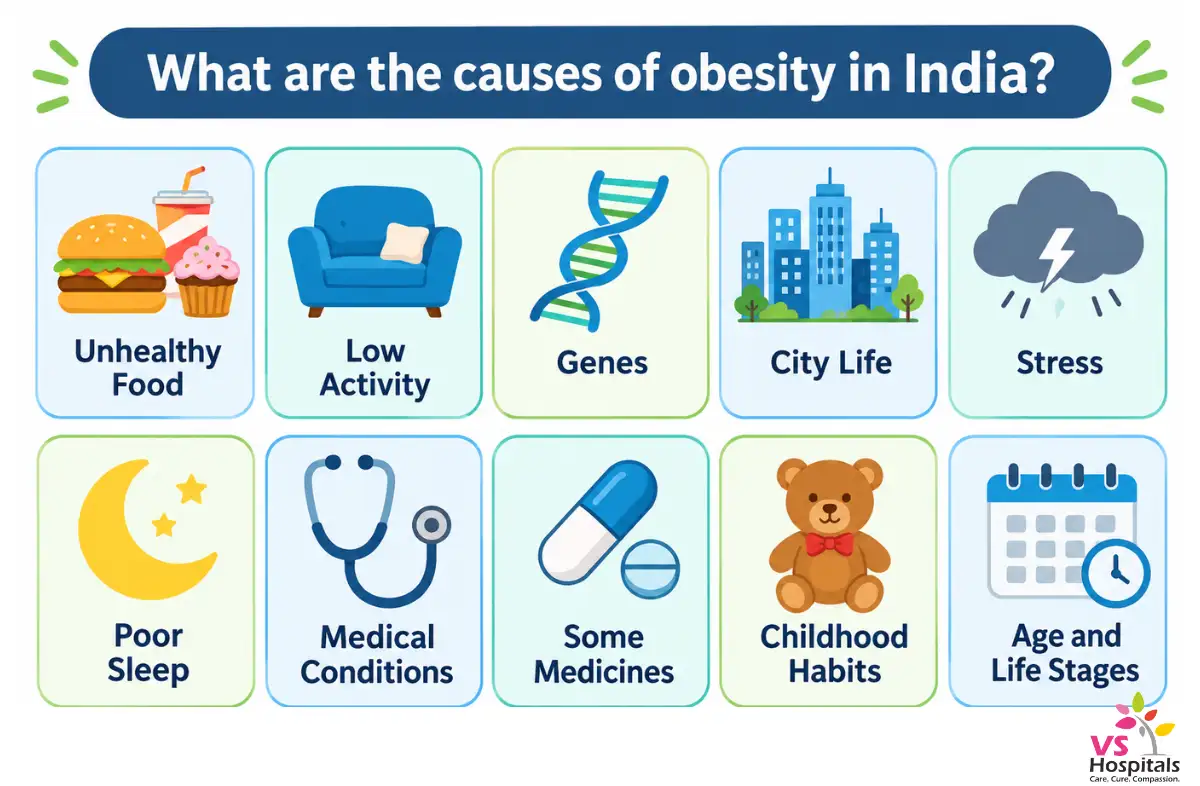
What are the Causes of Obesity in India?
Obesity rarely has one cause. Usually several things add up over time.
1. Unhealthy Eating Habits
Food that is high in sugar, refined flour, oil and salt is easy to find and cheap. Sweets, fried snacks, sugary drinks, bakery items and packaged foods add many calories without making you feel full. Large portions and eating late at night add to the problem.
2. Too Little Physical Activity
Desk jobs, long hours on screens, travel by vehicle and fewer chances to walk mean that many people burn fewer calories than before. When you eat more energy than you use, the extra is stored as fat.
3. Genes and Family History
Genes can affect appetite, how fast you burn energy and where your body stores fat. Many Indians tend to store fat around the belly. Genes do not decide your fate, but they can make weight gain easier, so healthy habits matter even more.
4. City Life and the Environment
Fast food delivery, long commutes, few safe parks or footpaths, and polluted air that keeps people indoors all make it harder to eat well and stay active.
5. Stress and Emotional Eating
Some people eat to cope with stress, anxiety, sadness or boredom. Binge eating disorder is also a recognised cause. Help from a counselor can make a big difference.
6. Poor Sleep
Sleeping less than 6 hours a night can change the hormones that control hunger and make you crave sugary and fatty food. Sleep apnea can also be both a cause and an effect of weight gain.
7. Medical Conditions
Some conditions can cause weight gain, such as an underactive thyroid (hypothyroidism), PCOS and, rarely, hormone problems like Cushing’s syndrome. A simple blood test can help find these.
8. Some Medicines
Steroids, some medicines for depression, mental health conditions, epilepsy and diabetes can cause weight gain. Do not stop any medicine on your own. Talk to your doctor if you think your medicine is affecting your weight.
9. Habits Formed in Childhood
Children who grow up with sweets, junk food and screens, and who play less outdoors, are more likely to become adults with obesity. Parents can help by making healthy meals and active play the normal routine.
10. Age, Life Stages and Social Factors
Weight tends to rise with age. Pregnancy, menopause and long periods of low activity can add to it. Studies show that belly fat is common in women in their thirties and forties. Income, education and access to healthy food and safe places to exercise also play a role.
What are the Symptoms and Signs of Obesity?
The main sign is a high BMI or a large waist. Other signs can include:
- Getting out of breath easily
- Tiredness and low energy
- Snoring or poor sleep
- Joint pain, especially in the knees and back
- Heavy sweating
- Dark, thick patches of skin on the neck or underarms
- Low mood or low confidence
Not everyone with obesity has symptoms, which is why regular check ups are important.
What are the Complications and Diseases Caused by Obesity?
Extra body fat, especially around the waist, can raise the risk of many conditions:
- Type 2 diabetes
- High blood pressure
- Heart disease and stroke
- Fatty liver
- Sleep apnea
- Knee and joint problems (osteoarthritis)
- PCOS and fertility problems
- Gallstones
- Some cancers, such as breast cancer after menopause, and bowel, womb and kidney cancers
- Depression and low self esteem
A risk is not a certainty. The good news is that weight loss can lower many of these risks. You can read more in our guide to the top 10 causes of cancer.
How is Obesity Treated?
Treatment is planned for each person. A doctor will check your weight, waist, health history and may advise blood tests for sugar, cholesterol, thyroid and liver. Treatment may include:
- Food changes: A balanced plan with more vegetables, fruits, pulses and whole grains, and less sugar, fried food and packaged snacks, often with help from a dietitian.
- Physical activity: At least 150 minutes of moderate activity a week, such as brisk walking, which is about 30 minutes on 5 days.
- Behavior support: Tools to manage stress, emotional eating and sleep.
- Medicines: For some people, a doctor may prescribe weight loss medicines. These should only be used with a prescription and regular follow up.
- Bariatric (weight loss) surgery: Considered for some people.
When is Weight Loss Surgery Considered?
Weight loss surgery is considered when other methods have not worked and a person has severe obesity or obesity related health problems. Doctors look at BMI, other health conditions and earlier attempts to lose weight. A team, including a surgeon, physician, dietitian and often a counselor, reviews each person before deciding. Surgery is not a quick fix, and it needs lifelong changes in food and follow up.
How Can You Reduce Obesity? Simple Steps
- Set a small goal first, such as losing 5% of your weight
- Fill half your plate with vegetables, and have less sugar, sweets and sugary drinks
- Walk every day and reduce long hours of sitting
- Sleep 7 to 8 hours each night
- Eat slowly, without screens, and avoid eating late at night
- Avoid crash diets and “fat burner” pills, which can harm your health
- Track your weight and waist every few weeks
- Ask your family to join you
When Should You See a Doctor?
See a doctor if your BMI or waist is in the obesity range, if you gain weight quickly without a clear reason, or if you have breathlessness, joint pain, snoring, high sugar or high blood pressure. Also see a doctor before starting any weight loss medicine or very low calorie diet.
Conclusion
The causes of obesity in India are many, from food and low activity to genes, stress, sleep and medical conditions. This means that blame does not help, but small and steady steps do. Start with food, movement and sleep, set a goal you can keep, and get medical advice if you are unsure. Every step towards a healthier weight helps protect your heart, sugar levels, joints and mood.
This article is for general information and awareness only. It is not a substitute for medical advice, diagnosis or treatment. Please consult a qualified doctor for your specific condition.