



Constipation is a frequent digestive problem that can cause discomfort and affect your daily life. This guide shares simple tips to prevent constipation and support a healthy, regular digestive system. Following these health tips can improve your gut health and reduce the unpleasant symptoms linked to this condition.
What is Constipation?
Constipation is a common digestive condition where bowel movements become infrequent or difficult to pass. It typically involves having fewer than three bowel movements per week, hard or lumpy stools, and straining during defecation. Causes can include poor diet, dehydration, and lack of exercise. Management usually includes increasing fiber intake, staying hydrated, and regular physical activity.
Symptoms of Constipation
Constipation is often characterized by the following symptoms:
- Fewer than three bowel movements per week
- Hard, dry, or lumpy stools
- Straining during bowel movements
- Feeling of incomplete evacuation
- Abdominal pain or bloating
- Difficulty passing stools
Recognizing these signs early helps you take the right steps for relief.
Reasons for Constipation
Constipation occurs when bowel movements become infrequent or hard to pass. Common reasons include:
- Low fiber intake: Diets lacking fruits, vegetables, and whole grains.
- Dehydration: Not drinking enough water.
- Sedentary lifestyle: Lack of physical activity slows bowel movements.
- Medication side effects: Certain pain relievers, antidepressants, and iron supplements.
- Ignoring the urge: Delaying bathroom trips can lead to hard stools.
- Underlying medical conditions: Hypothyroidism, diabetes, or irritable bowel syndrome (IBS).
Addressing these factors can help lower the risk of constipation.
Risk Factors for Constipation
Certain factors can increase the likelihood of developing constipation:
- Age: Older adults tend to have slower gut movement and less regular bowel habits.
- Gender: Women, especially during pregnancy or after delivery, may experience constipation more often.
- Diet: A diet high in processed foods and low in fiber can contribute to constipation.
- Stress: High stress levels can affect digestion.
- Medical conditions: Conditions like irritable bowel syndrome (IBS), diabetes, or hypothyroidism can increase the risk of constipation.
Complications
If left unaddressed, constipation can lead to several complications, including:
- Hemorrhoids: Straining during bowel movements can cause veins in the rectum to swell and become painful.
- Fecal Impaction: Severe constipation can lead to a hard mass of stool that becomes stuck in the intestines, which may need medical help.
- Anal Fissures: Hard stools can cause tiny tears in the lining of the anus, leading to pain and bleeding.
- Rectal Prolapse: Chronic straining may cause the rectum to protrude from the anus, which can sometimes need surgery.
Prevention
Preventing constipation is often possible through lifestyle changes. Here are some effective tips:
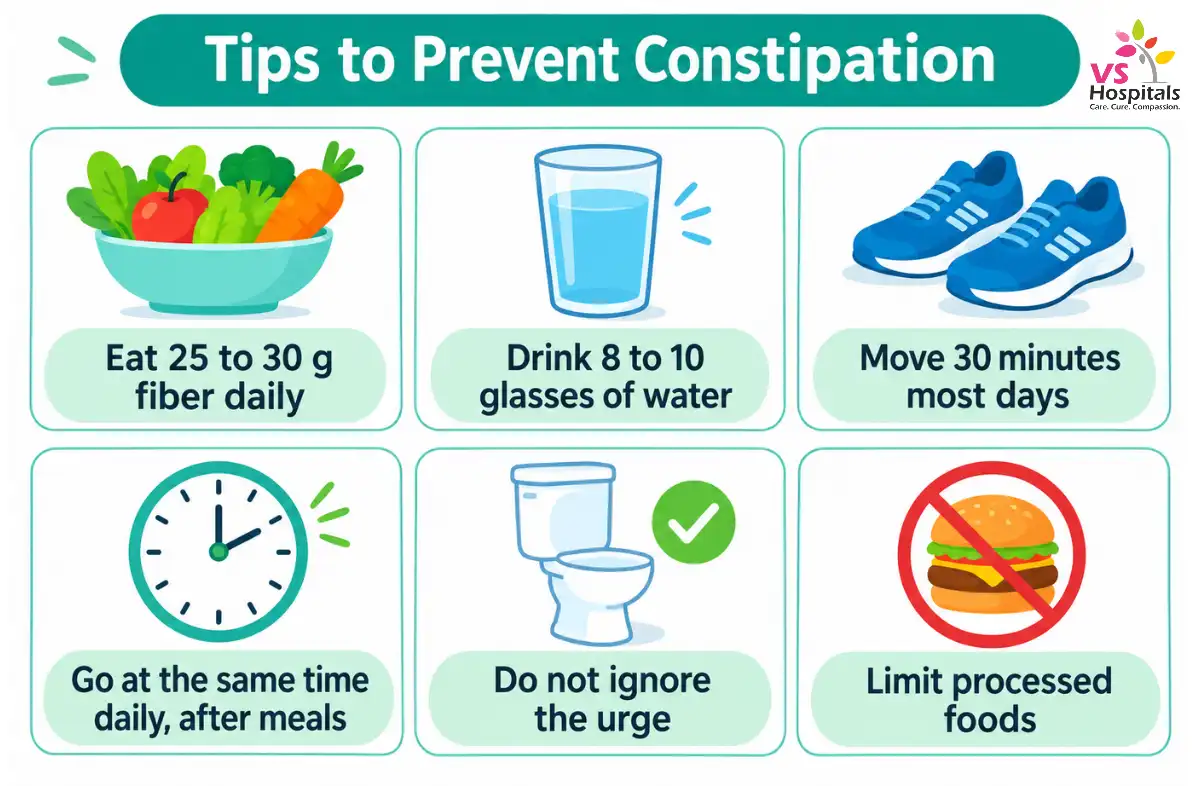
- Stay Hydrated: Aim for about 8 to 10 glasses of water daily to help soften stool.
- Regular Exercise: Aim for at least 30 minutes of physical activity most days of the week to support digestive health.
- Establish a Routine: Try to have a regular schedule for bowel movements, such as after meals, to help train your body.
- Don’t Ignore Urges: Respond to your body’s natural urges to avoid stool hardening.
- Limit Stress: Practice relaxation techniques like yoga or meditation, as stress can affect your digestive system.
Diet Tips for Digestive Health
A healthy diet plays a big role in preventing constipation. Here are some essential tips:
- Increase Fiber Intake: Aim for 25 to 30 grams of fiber daily from whole grains (brown rice, whole wheat bread), fruits (apples, pears, berries), vegetables (carrots, broccoli, leafy greens), and legumes (beans, lentils).
- Limit Processed Foods: Reduce low-fiber, processed foods like white bread, pastries, and fast food, which can contribute to constipation.
- Include Probiotics: Yogurt, kefir, and fermented foods may support gut health and digestion.
- Healthy Fats: Avocados, nuts, and olive oil can be part of a balanced diet.
- Snack Wisely: Choose high-fiber snacks like nuts, seeds, and popcorn instead of chips or cookies.
Summary of Health Tips to Prevent Constipation
- Drink plenty of water and stay hydrated.
- Include regular physical activity in your routine.
- Follow a consistent schedule for bowel movements.
- Listen to your body and respond to urges promptly.
- Focus on a fiber-rich diet with fruits, vegetables, and whole grains.
- Limit processed and low-fiber foods.
- Consider adding probiotics and healthy fats to your diet.
Following these tips can support your digestive health and lower the risk of complications. Consistency is key, and small changes made daily can make a difference.
Lifestyle Tips to Prevent Constipation
Exercise Regularly
Physical activity stimulates the muscles in the intestines, helping to move stool through the digestive system. Aim for at least 30 minutes of moderate exercise most days of the week. Walking, jogging, cycling, and yoga can all help.
Establish a Routine
A regular bathroom routine can help train your body to have bowel movements at the same time each day. Try to go at the same time daily, especially after meals, when the digestive system is most active.
Don’t Ignore the Urge
Holding in stool can lead to constipation and discomfort. Responding promptly to your body’s signals is one of the simplest ways to prevent constipation.
Practice Stress Management
Stress can affect your digestive system and may lead to constipation. Techniques such as yoga, meditation, and deep breathing can help manage stress and support your overall well-being.
Constipation Treatment: Medical and Natural Remedies
Over-the-Counter Solutions
If lifestyle and diet changes are not enough, over-the-counter options such as fiber supplements or laxatives can give temporary relief. Use them only for a short time and under a healthcare professional’s guidance to avoid dependency and side effects.
Herbal Remedies
Some herbal remedies, such as senna and cascara, have laxative properties. Always check with a healthcare provider before using them, especially if you are pregnant, breastfeeding, or taking other medicines. Herbal teas like peppermint or ginger may also help soothe the digestive tract.
Professional Guidance
If you have constipation that lasts a long time, seek medical advice. A healthcare provider can find the underlying cause and recommend the right treatment. This is important because constipation can sometimes be linked to other health problems.
Quick Relief for Constipation
For immediate constipation relief at home, drink a glass of warm water, eat fiber-rich fruits like prunes, kiwi or papaya, and take a gentle walk to get the bowels moving. If these steps do not help within a day or two, or if you have severe pain, speak to a doctor.
Practical Tips to Stop Constipation
Mindful Eating Habits
Chewing food well and eating slowly can support digestion. Avoid rushing through meals.
Balanced Meals
Meals with a mix of fiber, protein, and healthy fats support regular bowel movements and overall digestive health.
Use of Natural Oils
Olive oil and flaxseed oil may help soften stool and make it easier to pass when added to your diet.
Warm Beverages
Starting your day with a warm drink, such as herbal tea or warm lemon water, may help stimulate digestion and encourage a bowel movement.
When to See a Doctor About Constipation
Consult a doctor if you experience:
- Constipation lasting more than three weeks
- Severe abdominal pain or bloating
- Blood in the stool or rectal bleeding
- Unexplained weight loss
- A sudden change in bowel habits
Early medical advice can help find the cause and prevent complications like hemorrhoids or fecal impaction.
Conclusion
Following these tips can support your digestive health and overall well-being. Eating more fiber, staying hydrated, exercising regularly, and managing stress can help you maintain regular bowel movements and reduce the discomfort of constipation. If problems continue, seek professional medical advice.