


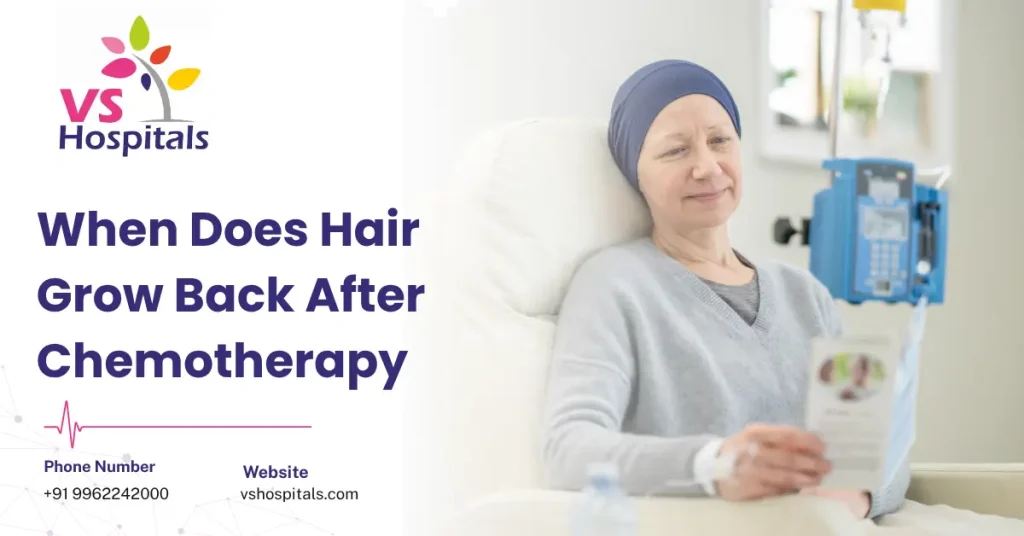
Losing your hair during cancer treatment can be one of the hardest parts of the journey. It is something others can see, and it can make you feel less like yourself. The good news is that for most people, hair loss from chemotherapy is temporary. Hair usually starts to grow back a few weeks after treatment ends, and most people see fuller hair within 3 to 6 months. The new hair may look a little different at first, but it often returns to its usual look with time. This guide explains the hair growth timeline after chemotherapy, why new hair may grow back curly or grey, how to care for it, and when to speak to your doctor.
Why Does Chemotherapy Cause Hair Loss?
Chemotherapy medicines work by attacking cells that grow and divide quickly, such as cancer cells. Hair roots, called hair follicles, also grow quickly, so they get affected too. This makes the hair weak, and it falls out.
Not every chemotherapy medicine causes hair loss. Some cause only mild thinning, while others can cause complete hair loss. It depends on the medicines, the dose and how your body reacts. Your doctor can tell you what to expect with your treatment plan.
When Does Hair Fall Out During Chemo?
Hair usually starts to fall out about 2 to 4 weeks after the first chemotherapy session. It may come out slowly, or in clumps when you wash or comb it. Some people feel a tender or itchy scalp just before or during this time. Hair loss can continue through treatment and for a few weeks after the last session.
Hair from other parts of the body, such as the eyebrows, eyelashes, arms, legs and underarms, may also fall out.
When Does Hair Grow Back After Chemo? The Timeline
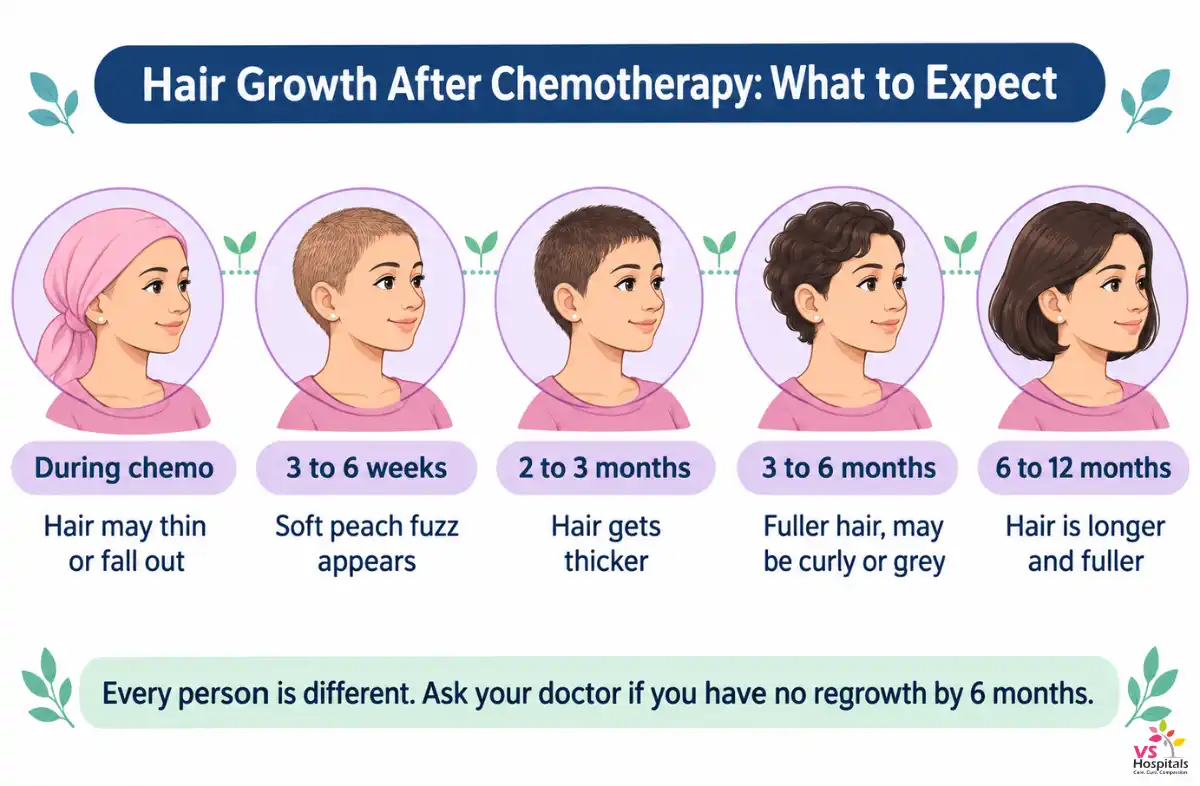
Everyone is different, but this is what many people notice after their last chemotherapy session:
| Time after chemo ends | What you may notice |
|---|---|
| During treatment | Hair may thin or fall out. Some people see a little regrowth even before treatment ends. |
| 3 to 6 weeks | Soft, fine hair, often called “peach fuzz”, starts to appear on the scalp. |
| 2 to 3 months | Hair becomes thicker, and you may have a short covering of real hair. |
| 3 to 6 months | Most people see fuller, more visible hair growth. |
| 6 to 12 months | Hair is longer and fuller. Many people are happy to go without a wig or scarf. |
| After 1 year | Hair often feels closer to how it was before treatment, though long hair can take more time to reach its old length. |
Hair growth after chemotherapy may be slower if you are on long term treatment, maintenance chemotherapy or some hormone tablets after chemo. Your age, genes and the medicines you received also make a difference.
Will My Hair Grow Back Differently?
 It may, at least for a while. Many people notice that their new hair is:
- Curly or wavy: Hair that was straight before may grow back curly. This is often called “chemo curls”.
- Grey or a different colour: New hair may come back grey or lighter until the colour cells in the hair roots recover.
- Thinner or softer: New hair is often fine and soft, like a baby’s hair, at first.
These changes are usually temporary. As your body heals and the hair roots recover, your hair often returns to its old texture and colour. This can take a year or more, so be patient with yourself.
What About Eyebrows, Eyelashes and Body Hair?
If you lose your eyebrows, eyelashes or body hair during chemotherapy, they usually grow back too. Until then, you can protect your eyes from dust and sun with glasses, as eyelashes help keep dust out. Eyebrow pencils and soft makeup can help you feel more like yourself. Avoid eyelash glue or strong products on sensitive skin without checking with your doctor.
How to Care for Your New Hair After Chemo
New hair is delicate. Treat it gently, the way you would care for a baby’s hair:
- Use a mild shampoo and conditioner, and avoid washing your hair too often.
- Pat your hair dry with a soft towel instead of rubbing it.
- Use a soft brush or a wide tooth comb.
- Avoid hair dryers on high heat, straighteners and curling irons.
- Avoid tight hairstyles, rubber bands and hair clips that pull on the roots.
- Protect your scalp from strong sun with a cap or scarf, and from cold weather.
- Sleep on a soft cotton or satin pillow cover to reduce rubbing.
- Eat a balanced diet with enough protein, such as dal, eggs, fish, paneer and pulses, along with vegetables and fruits.
Gentle scalp massage may feel soothing. Ask your doctor first, especially if your blood counts are low or your scalp is sore.
Can You Speed Up Hair Growth After Chemotherapy?
There is no proven way to make hair grow back much faster. Your body needs time to recover. A few things may help:
- Minoxidil: This is a hair growth medicine that may help hair grow back sooner, but more research is needed. Use it only if your doctor advises it.
- Scalp cooling: Some hospitals offer a cold cap that cools the scalp during chemotherapy sessions. It can reduce hair loss in some people. It does not suit every type of cancer or every person, so ask your oncologist if it is right for you.
- Supplements: Do not start biotin or any hair supplement on your own. Some supplements can affect cancer treatment or blood test results. Always check with your cancer care team first.
Be careful with oils, herbal packs or treatments that promise fast results. Your scalp is sensitive after chemotherapy, and some products can cause irritation or allergy.
When Can You Colour, Perm or Straighten Your Hair Again?
Chemicals can damage new hair and irritate a sensitive scalp. Wait until:
- Your hair is at least about 2.5 cm (1 inch) long
- Your scalp is healthy, with no dryness, sores or itching
- Your hair is not breaking easily
Before you use any colour, perm or straightening treatment, do a patch test. Put a small amount on a hidden area, such as behind the ear, and wait 48 hours to check for a reaction. Natural products such as henna can also cause allergies, so test them too. If you are unsure, ask your doctor or an experienced hairdresser.
Does Hair Always Grow Back After Chemo?
For most people, yes. In rare cases, hair grows back very thin or does not grow back fully. A few chemotherapy medicines, such as docetaxel, are linked with a small chance of long term hair loss. Radiation therapy to the head can also cause hair loss in the treated area, and this may not always grow back.
If your hair has not started to grow back within about 6 months after treatment, or if it is growing back very thin or in patches, talk to your doctor. A skin and hair specialist may be able to help.
Coping With Hair Loss and Regrowth
Hair loss can affect your confidence, and it is normal to feel upset. These ideas may help:
- Cut your hair short before treatment, so the change feels less sudden.
- Try a wig, scarf, cap or turban, or go without, whatever feels right for you.
- Talk to family, friends or a cancer support group about how you feel.
- Remind yourself that hair loss is usually a sign of treatment, not a sign that something is wrong.
If you feel low for a long time, please tell your doctor. Emotional support is an important part of cancer care.
When Should You Talk to Your Doctor?
Speak to your doctor or cancer care team if you notice:
- No new hair growth about 6 months after finishing chemotherapy
- Hair that is growing back in patches, or getting thinner again
- A red, painful, itchy or flaky scalp
- Hair loss that suddenly gets worse after it had started growing back
To meet a doctor, visit the VS Hospitals doctors page.
Conclusion
Hair growth after chemotherapy takes time, but for most people the hair does come back. Soft fuzz often appears within a few weeks of finishing treatment, and fuller hair usually grows in 3 to 6 months. Your new hair may be curly, grey or thinner at first, but these changes are often temporary. Be gentle with your hair, avoid chemicals until it is stronger, and talk to your doctor before trying any treatment or supplement.
This article is for general information and awareness only. It is not a substitute for medical advice, diagnosis or treatment. Please consult a qualified doctor for your specific condition.