

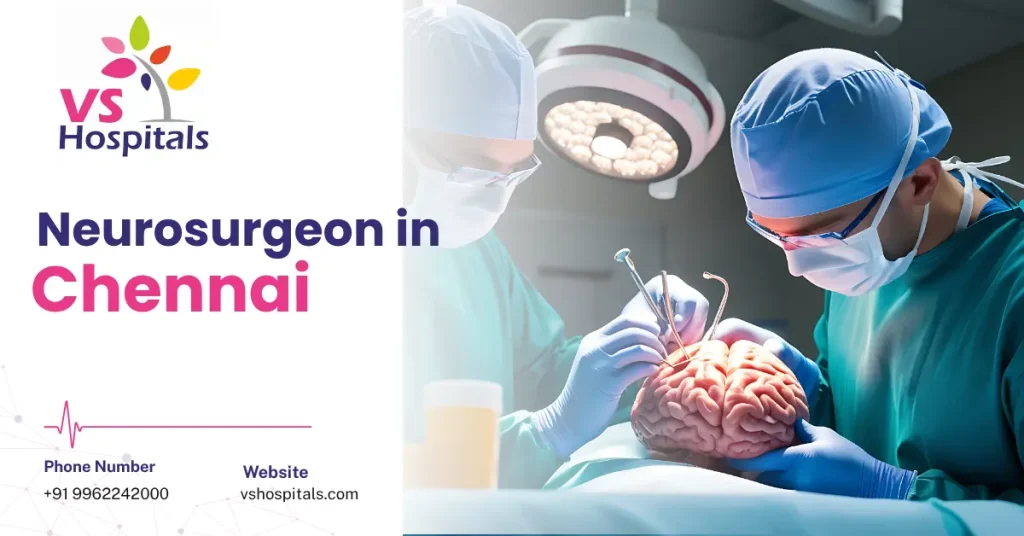
If you are looking for a neurosurgeon in Chennai, it helps to understand what neurosurgeons and neurologists do and when each is needed. Neurosurgery is a specialised field focused on the diagnosis and surgical treatment of conditions affecting the brain, spine and nervous system. From head injuries and brain tumours to spinal disorders, neurosurgeons manage a wide range of problems that may need both surgical and non-surgical care. Neurologists work alongside them, diagnosing and treating nervous system disorders mainly with clinical assessment, investigations and medicines.
This guide explains what each specialist does, when to consult them, the common procedures involved and how to choose a doctor with confidence.
What is a Neurosurgeon?
A neurosurgeon is a doctor trained to diagnose and surgically treat conditions of the brain, spine and nerves. After MBBS, neurosurgeons undergo specialised training in neurosurgery through recognised postgraduate pathways, such as a direct six-year MCh programme or a three-year MCh programme following an eligible postgraduate surgical qualification. They differ from neurologists in that they are specifically trained to perform surgery on the brain, spinal cord and nerves.
What Do Neurosurgeons Do?
Neurosurgeons diagnose, manage and surgically treat disorders of the brain, spinal cord and nervous system. Their work covers a wide range of conditions, from emergency head injuries to long-standing spinal problems.
Key responsibilities include:
- Diagnosing neurological conditions through examination, imaging and tests
- Performing surgical and minimally invasive procedures
- Managing care before and after surgery
- Working with neurologists, physiotherapists and other specialists for complete treatment
Neurosurgeon vs Neurologist: What Is the Difference?
Both specialists treat the nervous system, but their roles are different.
- Neurologist: Neurologists diagnose and manage conditions such as epilepsy, migraine, stroke, neuropathy and movement disorders through clinical assessment, investigations, medicines and other appropriate treatments.
- Neurosurgeon: Performs surgery when a condition needs an operation, such as a brain tumour, a head injury with bleeding or a spinal disc problem.
| Neurologist | Neurosurgeon | |
|---|---|---|
| Main role | Diagnosis and medical management of nervous system conditions | Surgical treatment of brain, spine and nerve conditions |
| Common conditions | Epilepsy, migraine, stroke, neuropathy, movement disorders | Brain and spinal tumours, head and spine injuries, hydrocephalus, selected vascular conditions, disc problems with nerve compression |
| Typical treatment | Clinical assessment, investigations, medicines and other appropriate treatments | Surgical and minimally invasive procedures, with pre- and post-operative care |
Many patients see a neurologist first. If surgery is needed, the neurologist refers them to a neurosurgeon, and the two doctors often coordinate care.
Neuro Specialists at VS Hospitals
Dr. Saranyan
MS, MCh (Neurosurgery) Senior Consultant, Neurosurgery Branches: VS Hospitals, Kilpauk and Tondiarpet, Chennai
Dr. Saranyan is a Senior Consultant Neurosurgeon at VS Hospitals, Chennai. He has experience in managing complex and high-risk neurological conditions and has performed over 1,000 neurosurgical procedures, particularly in traumatic brain injury and emergency neuro cases. He completed his MS and MCh (Neurosurgery) from well-known universities in India and regularly attends workshops and conferences to stay updated on developments in his field.
Areas of Practice
- Traumatic brain injury management
- Spine surgery
- Brain and spinal tumour surgery
- Management of selected stroke-related conditions, brain aneurysms and arteriovenous malformations (AVMs), including surgical intervention when indicated
- Awake and functional neurosurgery
- Neuronavigation and intraoperative neuromonitoring
- Endoscopic skull base and intracranial procedures
View Full Profile | Book Appointment
Dr. L. Sindhuja
MD, DNB (Paediatrics), DM (Neurology) Senior Consultant, Neurology | 14+ Years of Experience Branches: VS Hospitals, Tondiarpet and Kilpauk, Chennai
Dr. L. Sindhuja is a Senior Consultant Neurologist at VS Hospitals, Chennai. She has over 14 years of clinical experience in neurology and paediatrics. Her qualifications include Paediatrics (MD, DNB) and, separately, Neurology (DM). Her approach focuses on relieving symptoms, improving quality of life and supporting long-term neurological health.
Areas of Practice
- Diagnosis and management of neurological conditions
- Long-term neurological care and follow-up
- Evaluation of symptoms such as headache, seizures, numbness and weakness
For children, please confirm with the appointment team that the condition falls within the doctor’s scope of practice when you book.
Why Visit a Neurosurgeon or Neurologist?
Consult a specialist if you experience:
- Chronic or severe headaches
- Recurring seizures or unexplained episodes of blackout
- Numbness, tingling or weakness in the arms or legs
- Persistent back or neck pain accompanied by numbness, weakness, nerve-related symptoms or suspected spinal cord compression
- Difficulty with balance, speech or memory
- Ongoing problems after a head or spine injury
Seek emergency care immediately for:
- Sudden weakness on one side of the body, facial drooping or difficulty speaking
- A sudden severe headache
- A severe head injury or a spine injury with weakness or loss of sensation
- A first seizure, or a seizure that does not stop
- Progressive leg weakness or loss of bladder or bowel control
Why early consultation helps:
- Accurate Diagnosis: Specialists are trained to identify complex neurological conditions that general examination may miss.
- Timely Treatment: Conditions such as stroke, brain bleeding and spinal cord compression need prompt care to reduce lasting damage.
- Right Treatment Path: Many neurological problems improve without surgery. A specialist can advise whether medicines, therapy or surgery is appropriate.
- Coordinated Care: Neurologists and neurosurgeons work together from diagnosis through rehabilitation.
Conditions Evaluated by Neurosurgeons and Neurologists
The conditions below are commonly evaluated by neurosurgeons, neurologists or both. Which specialist you need depends on the condition and its severity.
Brain and Intracranial Conditions
- Brain Tumours: Abnormal growths of cells in or around the brain. They may be benign or malignant.
- Pituitary Tumours: Growths in the pituitary gland. Selected cases are treated with endoscopic skull base surgery.
- Hydrocephalus: A build-up of cerebrospinal fluid (CSF) in the fluid-filled spaces (ventricles) of the brain.
- Traumatic Brain Injury (TBI) and Head Injuries: Brain injury caused by accidents or falls, which may involve bleeding inside the skull.
- Stroke: Occurs when blood supply to part of the brain is blocked (ischaemic stroke) or a blood vessel in the brain bursts (haemorrhagic stroke). It is a medical emergency. Most strokes are managed by neurologists, and selected cases need neurosurgical or endovascular treatment.
- Brain Aneurysms: Weakened, bulging areas in the wall of a brain artery.
- Arteriovenous Malformations (AVMs): Abnormal tangles of blood vessels in which arteries connect directly to veins.
Spine and Spinal Cord Disorders
- Spinal Tumours: Abnormal growths in or around the spinal cord or vertebrae.
- Herniated Discs: Disc material that pushes out of its normal position and may press on nearby nerves, causing pain, numbness or weakness.
- Spinal Cord Compression: Pressure on the spinal cord from causes such as disc problems, tumours, injury or narrowing of the spinal canal. It can cause numbness, pain or weakness and needs urgent assessment when symptoms worsen.
- Neck and Back Pain: Most cases are mechanical and improve with conservative treatment. Specialist assessment is advised when pain comes with numbness, weakness or other nerve symptoms.
- Spine Injuries: Damage to the vertebrae, ligaments or spinal cord caused by falls or trauma.
General Neurological and Nerve Conditions
- Epilepsy and Seizures: Epilepsy is a condition of recurrent, unprovoked seizures caused by abnormal electrical activity in the brain. A single seizure can also have other causes and needs evaluation.
- Neuropathy and Peripheral Nerve Damage: Damage to the nerves outside the brain and spinal cord, causing numbness, tingling or weakness in the limbs.
- Movement Disorders and Parkinson’s Disease: Conditions that affect movement and coordination. They are mainly managed with medicines, and Deep Brain Stimulation (DBS) is considered for selected patients.
- Migraine and Chronic Headaches: Recurring or severe headaches. Migraine is a neurological condition, and most headaches are managed without surgery.
- Paediatric Neurological Disorders: Neurological conditions in infants, children and adolescents. These should be evaluated by a doctor with appropriate training and scope of practice.
When is Neurosurgery Necessary?
Surgery may be considered for brain tumours, certain spinal conditions, brain haemorrhage, aneurysms and other conditions, depending on severity and clinical assessment. The decision is made after examination and investigations, and your doctor will explain the options, risks and expected recovery before recommending an operation.
Can Neurological Conditions Be Treated Without Surgery?
Yes. Many neurological conditions are managed with medicines, rehabilitation, lifestyle changes and regular monitoring. Surgery is considered only when it is clinically indicated.
What Tests May Be Recommended?
The choice of investigation depends on the suspected condition. Commonly used tests include:
- MRI of the brain and spine: Detailed images of the brain, spinal cord and nerves.
- CT scan: Quick imaging, often used in head injury and emergencies.
- CT angiography: Images of blood vessels using contrast dye.
- MR angiography: Images of blood vessels using MRI.
- EEG (electroencephalogram): Records brain electrical activity, generally used as part of neurological evaluation when clinically indicated.
Procedures Performed by a Neurosurgeon
Neurosurgery includes a range of procedures, and treatment depends on the individual diagnosis. Common examples include:
- Craniotomy: Opening the skull to remove a brain tumour, relieve pressure or repair an injury.
- Spinal Fusion: A procedure that joins two or more vertebrae to stabilise the spine. It may be recommended for spinal instability, deformity or certain degenerative conditions.
- Endoscopic Surgery: Minimally invasive approaches used for selected conditions, including certain pituitary tumours and skull base lesions.
- Aneurysm and AVM Treatment: Depending on the condition, treatment may involve microsurgical clipping, endovascular procedures or other appropriate management approaches.
- Ventriculoperitoneal (VP) Shunting: A procedure that diverts excess cerebrospinal fluid from the brain’s ventricles into the abdominal cavity to manage hydrocephalus.
- Microsurgery: Precise techniques for nerve and spinal procedures.
- Deep Brain Stimulation (DBS): A treatment option for selected patients with movement disorders, including Parkinson’s disease, to help manage certain symptoms.
Your doctor will explain which procedure, if any, suits your condition after a full evaluation.
How to Choose a Neurosurgeon in Chennai
Use these points to choose a neurosurgeon who suits your needs.
- Qualifications and Registration Check that the doctor holds recognised qualifications such as MCh in Neurosurgery or DNB (Neurosurgery) and is registered with the Tamil Nadu Medical Council or the National Medical Commission. You can verify registration on the official NMC portal.
- Experience in Your Condition Neurosurgery has many sub-areas, including trauma, spine, tumour and vascular surgery. Choose a doctor whose experience matches your problem.
- Clear Communication A good doctor explains your diagnosis, the options available and the risks and benefits before recommending a treatment.
- Diagnostic and Emergency Support Neurological conditions can worsen quickly. Choose a hospital with imaging, intensive care and emergency services available when needed.
- Rehabilitation and Follow-Up Recovery after brain or spine treatment often needs physiotherapy and regular review. Pick a doctor and hospital that are convenient for follow-up.
- Second Opinion For major surgery, it is reasonable to seek a second opinion. A good doctor will support this.
Conclusion
Choosing a neurosurgeon or neurologist is an important health decision. Look at qualifications, registration, experience with your condition, communication and access to diagnostic and emergency support. Early consultation for persistent headache, nerve symptoms, back pain with neurological signs or injury often leads to simpler treatment and better recovery.