




A sore throat, a mouth ulcer or a hoarse voice is something almost everyone has had. Most of the time these problems are minor and go away on their own. But sometimes they are the first sign of head and neck cancer. Finding cancer early can improve treatment options and outcomes. This guide explains the early head and neck cancer symptoms in simple words, who is at risk, how doctors check for it, and when you should get help. Most people with these symptoms do not have cancer, but it is always safest to get checked.
What Is Head and Neck Cancer?
Head and neck cancer is a group of cancers that start in the head and neck area. They usually begin in the thin cells that line the mouth, throat and nose. The main areas are:
- The mouth, including the lips, tongue, gums and cheeks
- The throat
- The voice box
- The nose and the air spaces around it, called sinuses
- The salivary glands, which make saliva
In India, smoking and chewing tobacco, along with areca nut and alcohol, are major risk factors, especially for mouth cancer.
What Are the Early Head and Neck Cancer Symptoms?
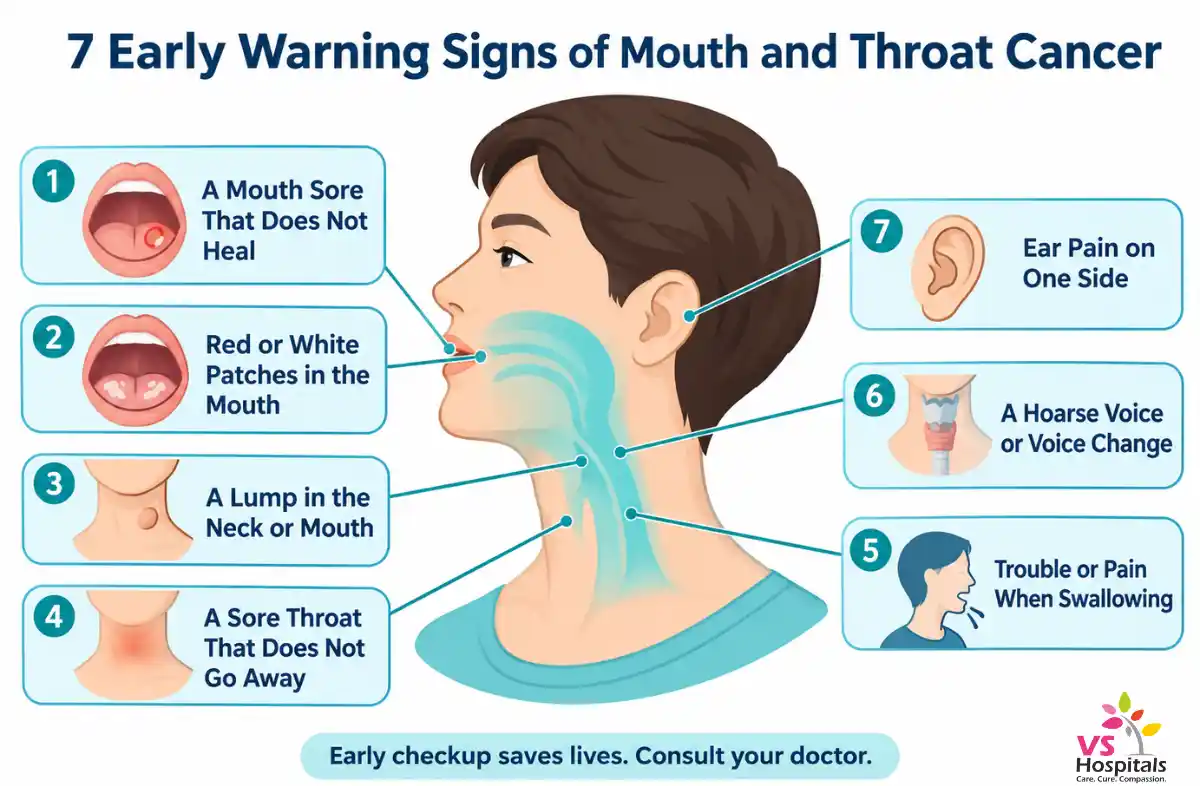
Early signs can be easy to miss because they often do not hurt. The key point is that they do not go away. Here are the seven signs to watch for.
1. A Mouth Sore That Does Not Heal
Most mouth ulcers heal within two weeks. They are often caused by a bitten cheek, hot food or a lack of vitamins. An ulcer that has not healed in three weeks needs to be checked, even if it does not hurt. Do not wait if it is growing, bleeding or keeps coming back in the same place.
2. Red or White Patches in the Mouth
A white or red patch on the tongue, gums or inside the cheeks can be harmless. But some patches may turn into cancer later, so a patch that does not go away needs a check by a doctor or dentist.
3. A Lump in the Neck or Mouth
A lump in the neck is one of the most common early signs. Neck glands often swell during an infection and go down in a few weeks. A lump that stays, has no clear cause or keeps growing needs a doctor visit, even if it is soft or does not hurt.
4. A Sore Throat That Does Not Go Away
A cold can cause a sore throat that goes away in a week or two. If your throat stays sore for two to three weeks, get it checked. Pain on one side of the throat, especially when you swallow, is also worth mentioning.
5. Trouble or Pain When Swallowing
Food may feel like it is sticking, or swallowing may hurt. Trouble swallowing should always be checked by a doctor.
6. A Hoarse Voice or Voice Change
Voice changes are common with a cold or after shouting. If your voice stays hoarse, rough or weak and does not get better in about three weeks, see a doctor. This is an important early sign of cancer in the voice box.
7. Ear Pain on One Side
Pain in one ear that does not go away, with no ear infection or clear cause, can be referred pain from a problem in the throat or mouth.
Which Signs Depend on the Area Affected?
Different areas of the head and neck can give different signs. This table shows what you may notice.
| Area | Signs you may notice |
|---|---|
| Mouth | Ulcer that does not heal, red or white patch, pain, loose teeth, numbness, trouble opening the mouth or moving the tongue |
| Throat | Long lasting sore throat, trouble swallowing, ear pain on one side, lump in the neck |
| Voice box | Hoarse voice, voice change, noisy breathing, cough |
| Nose and sinuses | A blocked nose on one side that does not clear, repeated nosebleeds, blood in the mucus, facial pain or numbness |
| Nasopharynx (behind the nose) | Blocked ear on one side, hearing loss, lump in the neck, nosebleeds |
| Salivary glands | A lump in the cheek, jaw or under the chin, numbness or weakness in the face |
When Should You See a Doctor?
A simple rule can help: if a mouth ulcer, sore throat, hoarse voice, neck lump or other unexplained symptom lasts two to three weeks, see a doctor or dentist. Do not wait that long if it is getting worse, bleeding, or making it hard to swallow or breathe. Do not keep taking antibiotics or pain medicines again and again without a clear diagnosis.
You can start with your dentist or family doctor. They may send you to an ENT specialist or a head and neck cancer doctor.
Go to an emergency room right away if you have trouble breathing, noisy breathing, heavy bleeding that does not stop, or you cannot swallow even your saliva.
What Are the Risk Factors for Head and Neck Cancer?
A risk factor is something that raises the chance of getting a disease. Having one does not mean you will get cancer. Tobacco, areca nut and alcohol are the major, well proven risks. The others are:
- Tobacco in any form: Smoking cigarettes or bidis, and chewing tobacco, gutka or khaini, are the biggest risks.
- Betel quid and areca nut: Chewing paan or supari, even without tobacco, can raise the risk of mouth cancer.
- Alcohol: Heavy drinking raises the risk, and drinking along with tobacco raises it much more.
- HPV infection: Some types of the human papillomavirus can cause cancer in the middle part of the throat, called the oropharynx, which includes the tonsils and base of the tongue.
- Mouth irritation: Some health guidance links long lasting irritation from sharp teeth or ill fitting dentures to mouth cancer, but it is not proven to cause it alone. Fixing them is still wise.
- Age and sex: The risk goes up with age, and men are affected more often than women. In people who chew tobacco, cancer can appear at a younger age.
- Sun on the lips: Long exposure to strong sun can lead to lip cancer.
- Epstein Barr virus: This common virus is linked to cancer at the back of the nose.
- Work exposure: Wood dust and some chemicals can raise the risk of nose and sinus cancers.
You can read about other causes in our guide to the top 10 causes of cancer.
Can You Check Your Mouth at Home?
A quick check once in a while can help you notice unusual changes. It cannot diagnose cancer or replace an exam by a doctor or dentist.
- In good light, look at your lips and the inside of your cheeks.
- Stick out your tongue and look at its top, sides and underside.
- Look at your gums and the roof of your mouth.
- Feel both sides of your neck and under your chin for lumps.
If you see a sore, a patch or a lump that does not go away in two to three weeks, see a doctor. People who chew or smoke tobacco should get their mouth checked by a doctor or dentist regularly. You can learn more in our guide to cancer screening tests for women.
How is Head and Neck Cancer Diagnosed?
Your doctor will first ask about your symptoms and check your mouth, throat and neck. Depending on what they find, you may need:
- Endoscopy: A thin tube with a tiny camera is used to look inside the nose, throat or voice box.
- Biopsy: A small piece of tissue is checked under a microscope in a lab. A biopsy is usually needed to confirm cancer.
- Imaging tests: CT, MRI or PET scans are chosen based on the suspected site. They show the size of a growth and whether it has spread.
Not everyone needs every test. A test result that needs more checking does not mean you have cancer. Many sores and lumps turn out to have harmless causes.
How is Head and Neck Cancer Treated?
Treatment depends on where the cancer is, how big it is and your overall health. It may include surgery, radiation, chemotherapy or newer drugs, often in a mix. A team of doctors plans the care.
How Can You Lower Your Risk?
Many head and neck cancers can be prevented. These steps help:
- Do not smoke or chew tobacco, paan or areca nut. Quitting at any age lowers your risk.
- Limit alcohol, or avoid it completely.
- Brush twice a day and visit your dentist regularly.
- Protect your lips from strong sun.
- HPV vaccination helps prevent infection with HPV types that can cause some throat cancers. It does not treat an existing infection. Ask your doctor if you are eligible.
Conclusion
Early head and neck cancer symptoms are often small and painless, so they are easy to ignore. A mouth sore, a sore throat, a hoarse voice or a lump that lasts two to three weeks deserves a check. Most of the time the cause is not cancer, but finding a problem early gives you more treatment options. If something does not feel right, do not wait.
This article is for general information and awareness only. It is not a substitute for medical advice, diagnosis or treatment. Please consult a qualified doctor for your specific condition.