


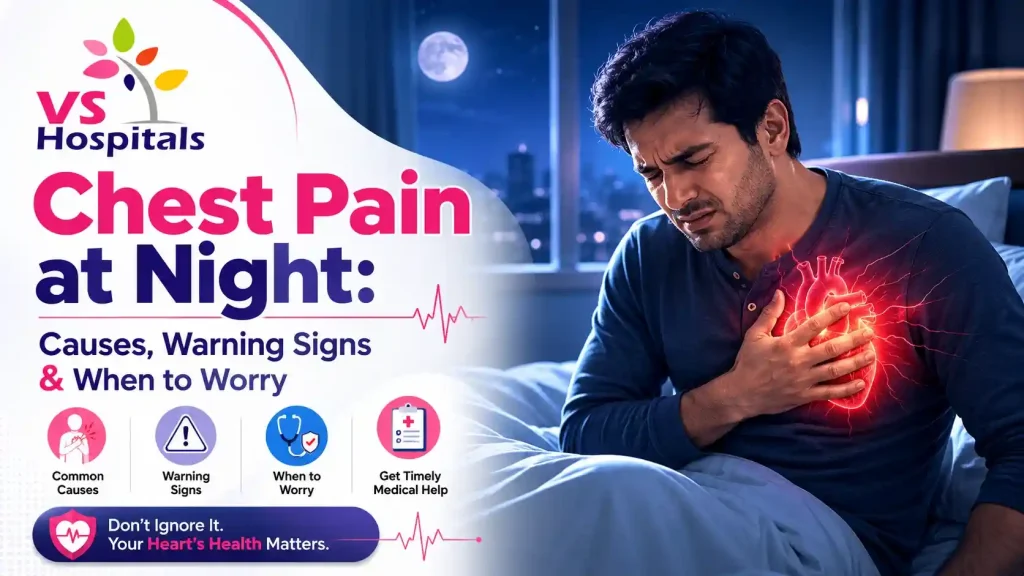
Chest pain at night is common and usually not a heart attack. Most cases come from acid reflux, muscle strain, anxiety, or sleep position. But chest pain that wakes you up from sleep, comes with sweating, shortness of breath, or pain spreading to the arm or jaw, needs urgent medical attention. If you’re searching “why does my chest hurt at night,” this guide breaks down the real reasons and what to do next.
Medically Reviewed By
Dr. A. S. Raghuram – 15+ yrs of Experience
MBBS, MD (Paediatrics), DM (Cardiology)
DM, MD, MBBS (IN)
VS Hospitals, Chennai.
Last reviewed: June 22, 2026.
Why Chest Pain Happens at Night
A lot of people notice chest pain only at night or right after lying down, even if they felt fine all day. Gravity, body position, and a slower digestive system at night all play a role. Here’s what’s usually going on.
1. Acid Reflux (GERD)
This is the most common reason for chest pain when lying down. When you lie flat, stomach acid can move back up into your food pipe, causing a burning feeling in the middle of the chest. Eating late, spicy food, or alcohol before bed makes it worse.
2. Anxiety and Stress
Chest tightness at night without any other symptom is often linked to stress or anxiety. The mind tends to wander at night, and a racing heart or shallow breathing can bring on sudden chest pain while sleeping.
3. Muscle or Rib Strain
Pain that gets worse when you press on the chest, twist, or change sleeping position usually points to a muscle or rib issue, not the heart.
4. Sleep Position
Sleeping on your left side can sometimes increase pressure on the chest and stomach, which is why some people report left side chest pain when lying down at night specifically.
5. Sleep Apnea
Pauses in breathing during sleep can cause sudden chest tightness or pain that wakes you up gasping. This is more common in people who snore heavily or feel exhausted even after a full night’s sleep.
6. Heart-Related Causes
Less common but serious. Chest pain that wakes you up from sleep, lasts more than a few minutes, and comes with sweating, nausea, or breathlessness could signal angina or a heart attack and needs emergency care immediately.
Chest Pain at Night in Women
Chest pain at night in women can look different from the classic pattern seen in men. Women may feel pressure, tightness, or even pain in the back, jaw, or stomach rather than sharp chest pain. What causes chest pain in a woman at night ranges from hormonal changes and anxiety to GERD, but heart-related causes should never be ruled out just because the pain feels mild or unusual.
Chest Pain Only at Night vs During the Day
If chest pain during sleep happens only at night and never during activity or daytime, it’s more likely tied to digestion, position, or anxiety. Pain that shows up with exertion during the day too needs heart screening, regardless of how it feels at night.
Why Does My Chest Hurt When I Wake Up From Sleep?
This pattern often points to acid reflux building up overnight, poor sleep posture, or in some cases, sleep apnea interrupting normal breathing. Pain after sleeping that fades once you’re upright and moving around is usually digestive rather than cardiac.
Warning Signs You Shouldn't Ignore
Get emergency help if chest pain at night comes with:
- Pain spreading to the arm, neck, jaw, or back
- Cold sweat or nausea
- Shortness of breath
- Dizziness or fainting
- Pain that doesn’t ease after a few minutes of rest
When to See a Doctor
If chest pains at night happen often, disturb your sleep regularly, or you simply can’t tell if it’s your heart, don’t guess. VS Hospitals has cardiology and emergency teams available for same-day evaluation, including ECG and stress testing, to find the real cause and rule out anything serious.
Simple Steps for Relief Tonight
- Avoid heavy meals 2–3 hours before bed
- Prop your upper body up slightly while sleeping
- Limit caffeine and alcohol in the evening
- Practice slow breathing if anxiety is the trigger
- Track when the pain happens to spot patterns
Conclusion
Chest pain at night can come from something as simple as a heavy dinner or a stressful day, or it can be your body’s way of flagging a heart problem that needs attention. The key is knowing the difference: occasional, position-related discomfort is usually harmless, while crushing pain with sweating, breathlessness, or pain spreading to your arm or jaw is never something to sleep through. When in doubt, get it checked — it’s always better to ask too early than too late.