



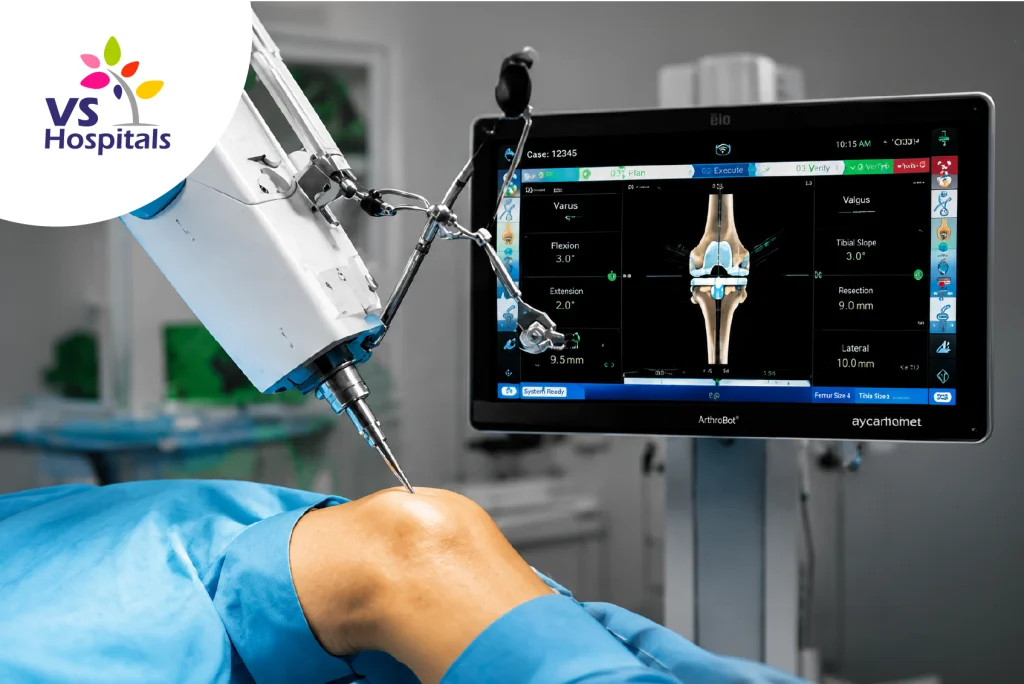
Robotic knee replacement surgery is an advanced form of knee replacement surgery where surgeons use robotic-assisted technology to perform the procedure with greater precision and accuracy.
Medically Reviewed By
Prof. Dr. S. Sundar – 30+ yrs of Experience
Sr. Consultant Joint Replacement & Tumour Surgeon Director, Department of Orthopaedics & Medical Director
M.S (Ortho), FIGOF (Munich)
VS Hospitals, Chennai.
Last reviewed: April 25, 2026.
What is Robotic Knee Replacement Surgery?
Traditionally, cardiac surgery required significant incisions and prolonged hospital stays. Today, VS Hospitals utilizes advanced endoscopic and robotic systems to perform complex repairs through incisions no larger than a few centimeters. This approach significantly reduces the risk of infection and minimizes post-operative pain.
How It Works:
- A 3D model of your knee is created before surgery
- The surgeon uses robotic guidance to plan the procedure
- The robotic arm assists in precise bone cutting and implant placement
- The surgeon remains in full control at all times
This technology allows for better alignment, minimal tissue damage, and faster recovery compared to traditional methods.
Why is Robotic Knee Replacement Surgery Done?
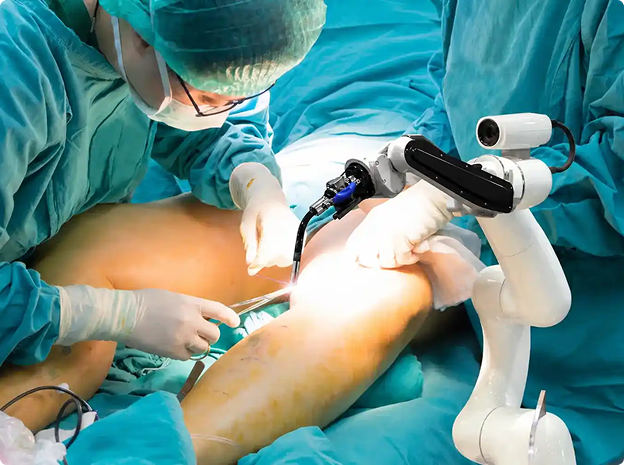
Robotic-assisted knee surgery is recommended for patients with severe joint damage who need more precision and better outcomes.
- Severe and persistent knee pain
- Difficulty walking or climbing stairs
- Joint stiffness and swelling
- Poor response to medications or physiotherapy
- Reduced quality of life
The goal is not just pain relief—but restoring natural knee movement and long-term joint function.
Conditions That Lead to Robotic Knee Replacement
When is Robotic Knee Replacement Recommended?
Doctors at VS Hospitals may recommend robotic total knee replacement when:
- Pain persists even at rest
- Daily activities are severely limited
- Knee deformity affects movement
- Non-surgical treatments fail
- Long-term precision and implant longevity are prioriti
When is Robotic Knee Replacement Not Recommended?
Robotic knee replacement surgery may not be suitable in cases of:
- Active infection
- Severe uncontrolled medical conditions
- Poor bone quality
- Inability to undergo rehabilitation
A detailed evaluation is required before proceeding.
Types of Robotic Knee Replacement Surgery

1. Robotic Total Knee Replacement (TKR)
Entire joint replaced
Ideal for advanced arthritis
2. Robotic Partial Knee Replacement (PKR)
Only damaged portion replaced
Preserves healthy bone
3. Robotic Bilateral Knee Replacement
Both knees replaced using robotic precision
4. Robotic Revision Knee Replacement
Replaces failed implants with high accuracy
How to Prepare for Robotic Knee Replacement Surgery
Medical Evaluation
- Blood tests, scans, and 3D imaging
- Full health assessment
Medication Review
- Stop blood thinners if advised
Physical Preparation
- Strengthening exercises
- Pre-surgery physiotherapy
Home Preparation
- Arrange support
- Remove fall hazards
Lifestyle Changes
- Quit smoking
- Maintain healthy weight
- Eat a balanced diet
Robotic Knee Replacement Surgery Procedure (Step-by-Step)
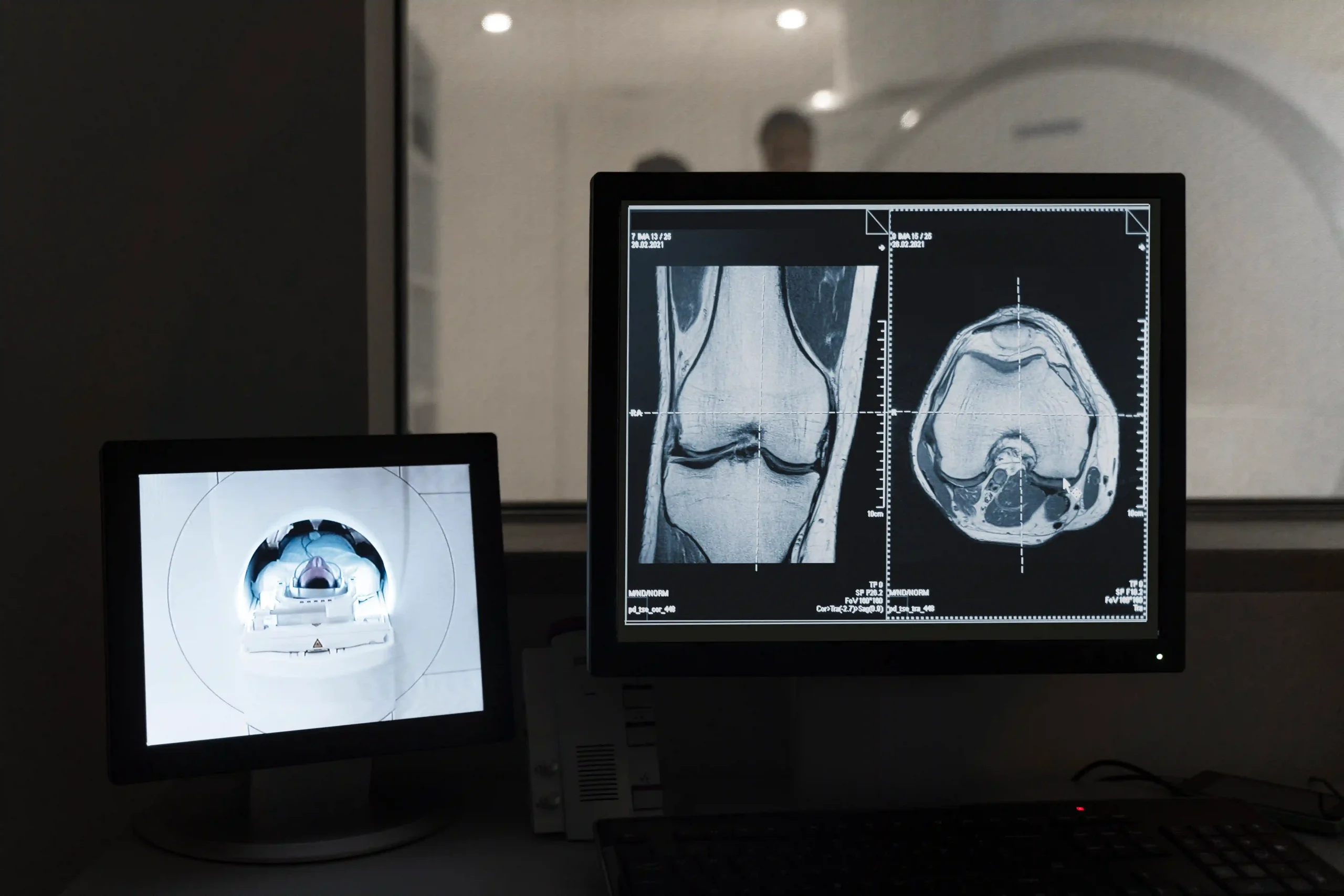
Before Surgery
- 3D imaging of the knee
- Surgical planning using robotic software
- Anesthesia administered
During Surgery
- Small incision made
- Robotic system guides bone preparation
- Damaged tissue removed with precision
- Implant placed accurately
- Knee movement tested
- Incision closed
After Surgery
- Recovery monitoring
- Pain management
- Physiotherapy begins within 24 hours
Surgery typically takes 1–2 hours.
Benefits of Robotic Knee Replacement Surgery
Risks and Complications
Even with advanced technology, some risks remain:
Common Risks
- Swelling and mild pain
- Blood clots
- Infection
Rare Risks
- Implant loosening
- Nerve damage
- Persistent discomfort
Risk Reduction
At VS Hospitals, experienced surgeons and advanced protocols help minimize complications.
Robotic Knee Replacement Recovery Timeline
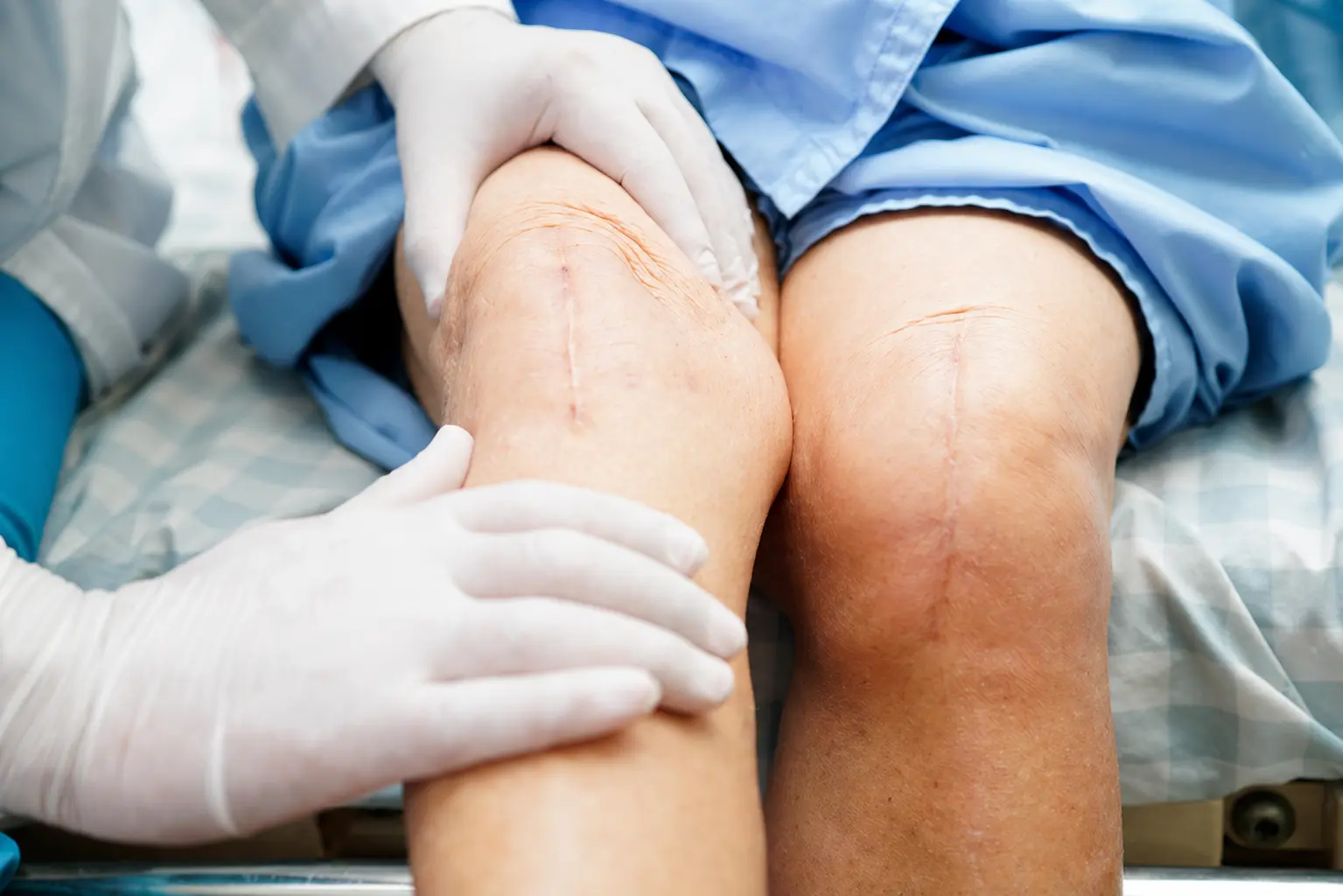
Week 1–2
- Walking with support
- Early exercises
Week 3–6
- Improved mobility
- Reduced dependence on support
Week 6–12
- Resume daily activities
3–6 Months
- Strength and flexibility improve
Full Recovery
- Up to 6–12 months, often faster than traditional surgery
Proper care after surgery ensures smooth knee replacement recovery.
Robotic vs Traditional Knee Replacement
| Feature | Traditional Surgery | Robotic Surgery |
| Precision | Manual | High accuracy |
| Recovery | Moderate | Faster |
| Pain | More | Less |
| Implant Alignment | Standard | Highly precise |
| Outcome | Good | Better long-term results |
Cost of Robotic Knee Replacement Surgery in India
The knee replacement cost for robotic surgery is slightly higher due to advanced technology.
Average Cost:
Single knee: ₹2,50,000 – ₹4,50,000
Both knees: ₹5,00,000 – ₹8,00,000
At VS Hospitals, patients receive advanced robotic treatment with cost-effective care and expert support.
Life After Robotic Knee Replacement Surgery

After recovery, most patients experience:
- Significant reduction in knee pain
- Improved mobility and flexibility
- Better daily functioning
Tips for Best Results:
- Follow physiotherapy regularly
- Avoid high-impact activities
- Maintain healthy weight
- Stay active
Conclusion
Robotic knee replacement surgery is a modern, highly advanced solution for treating severe knee pain and joint damage. With improved precision, faster recovery, and better long-term outcomes, it is becoming the preferred choice for many patients.
At VS Hospitals, expert orthopedic surgeons combine advanced robotic technology with personalized care to deliver excellent results.
If you are considering knee replacement surgery, consult a specialist to explore whether robotic-assisted treatment is the right option for you.