


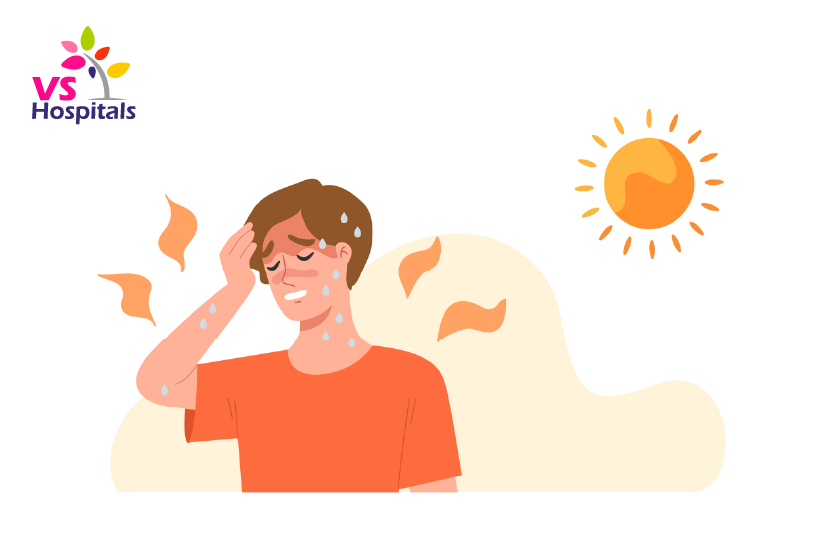
Summer temperatures are rising rapidly across India, especially in cities like Chennai, where extreme heat and humidity can increase the risk of heat-related illnesses. One of the most dangerous conditions caused by excessive heat exposure is heat stroke. It is a medical emergency that occurs when the body loses its ability to control temperature, causing body heat to rise dangerously.
Heat stroke can affect anyone, including children, elderly people, outdoor workers, athletes, delivery executives, and people who spend long hours in the sun. Without immediate treatment, it may lead to brain damage, organ failure, or even death.
Understanding heat stroke symptoms early can help save lives. In this guide, you’ll learn about the warning signs, causes, first aid treatment, prevention tips, and when to seek emergency medical care.
Medically Reviewed By
Dr. R. Guruparan – 10+ years of experience
Consultant & Head of Emergency Medicine
MBBS, MD, FACEE, MRCEM (UK).FRCEM (UK), MBA (HAHM)
VS Hospitals, Chennai.
Last reviewed: May 19, 2026.
What Is Heat Stroke?
Heat stroke is a severe heat-related illness that happens when the body temperature rises above 104°F (40°C). Normally, the body cools itself through sweating. But during extreme heat exposure, dehydration, or prolonged sun exposure, the body’s cooling system can fail.
As a result, internal body temperature rises quickly and starts affecting vital organs like the brain, heart, kidneys, and muscles.
Heat stroke is considered a medical emergency and requires immediate treatment.
Difference Between Heat Stress, Heat Exhaustion & Heat Stroke
| Condition | Severity | Main Symptoms |
| Heat Stress | Mild | Sweating, tiredness, thirst |
| Heat Exhaustion | Moderate | Heavy sweating, weakness, dizziness |
| Heat Stroke | Severe Emergency | Confusion, high fever, unconsciousness |
Common Heat Stroke Symptoms
Recognizing the symptoms early is extremely important. Heat stroke symptoms may develop gradually or suddenly.
Early Heat Stroke Symptoms
During the beginning stage, the body starts showing warning signs such as:
- Excessive sweating
- Severe thirst
- Headache
- Muscle cramps
- Fatigue or weakness
- Dizziness
- Irritability
- Nausea
- Feeling overheated
These symptoms are often ignored, especially by people working outdoors in hot weather.
Serious Heat Stroke Symptoms
As body temperature rises further, symptoms become more dangerous.
Common serious symptoms include:
- Body temperature above 104°F (40°C)
- Rapid heartbeat
- Red or hot skin
- Difficulty breathing
- Vomiting
- Confusion
- Slurred speech
- Severe dehydration
- Loss of coordination
- Extreme weakness
At this stage, immediate cooling and medical care are necessary.
Emergency Warning Signs of Heat Stroke
Certain symptoms indicate a life-threatening emergency.
Seek emergency medical help immediately if someone experiences:
- Loss of consciousness
- Seizures
- Delirium
- Fainting
- Hallucinations
- No sweating despite extreme heat
- Difficulty responding
- Collapse
Heat stroke can become fatal within minutes if treatment is delayed.
Heat Stroke Symptom Progression Timeline
Stage 1 — Early Heat Stress
- Sweating heavily
- Feeling thirsty
- Mild tiredness
- Warm skin
Stage 2 — Heat Exhaustion
- Dizziness
- Weakness
- Nausea
- Muscle cramps
- Heavy sweating
Stage 3 — Heat Stroke
- High fever
- Confusion
- Rapid pulse
- Hot skin
- Vomiting
Stage 4 — Medical Emergency
- Seizures
- Fainting
- Organ damage
- Unconsciousness
This timeline improves user understanding and helps readers identify dangerous symptoms quickly.
Heat Exhaustion vs Heat Stroke
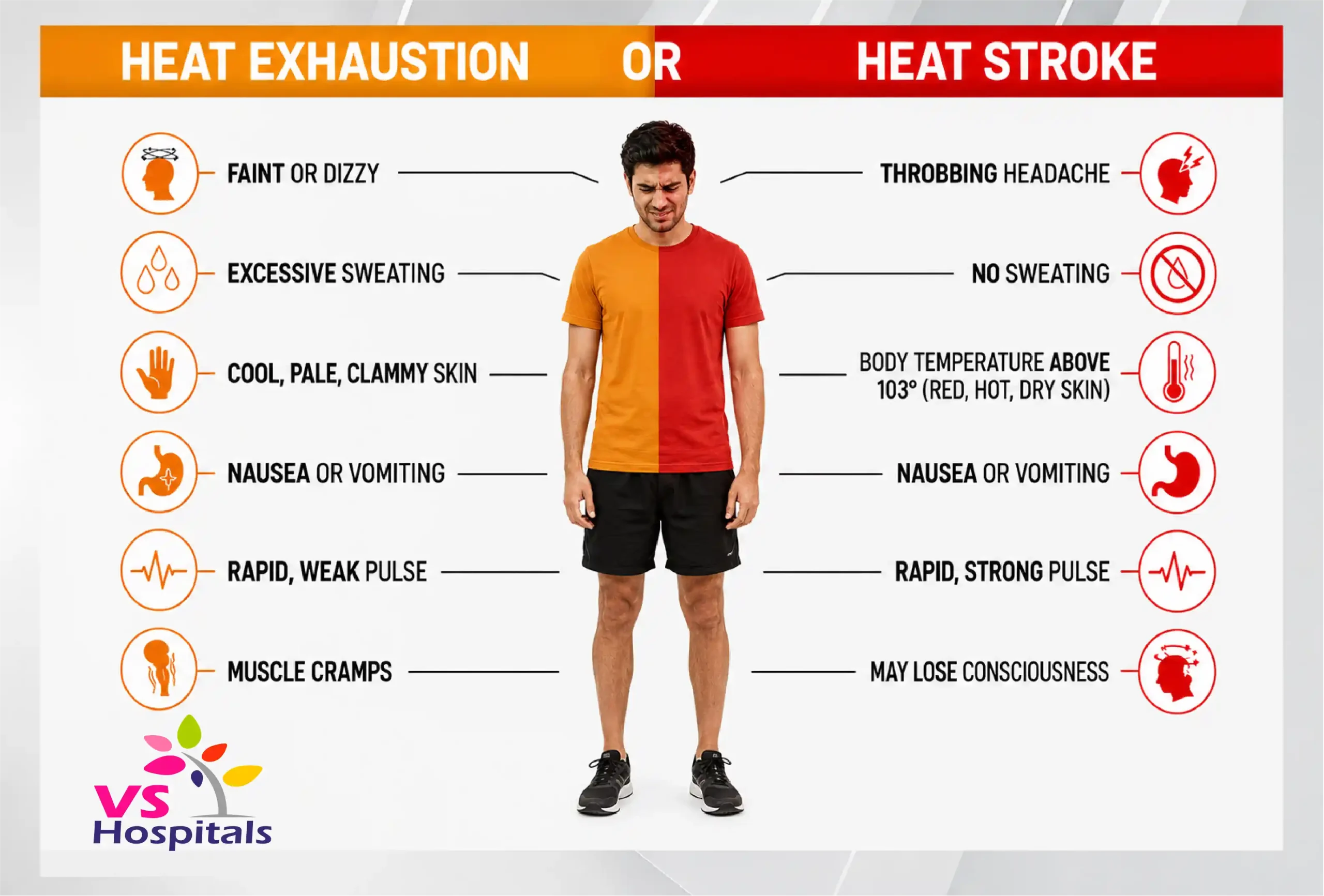
Many people confuse heat exhaustion with heat stroke. However, heat stroke is far more dangerous.
| Heat Exhaustion | Heat Stroke |
| Heavy sweating | Dry or extremely hot skin |
| Mild weakness | Severe confusion |
| Dizziness | Fainting |
| Muscle cramps | Seizures |
| Body temperature slightly high | Temperature above 104°F |
| Usually improves with rest | Medical emergency |
Key Difference
Heat exhaustion can often improve with hydration and rest, while heat stroke requires urgent medical attention.
What Causes Heat Stroke?
Heat stroke usually happens when the body is exposed to high temperatures for long periods without proper cooling.
Environmental Causes
- Extreme summer temperatures
- Heat waves
- High humidity
- Poor ventilation
- Staying in closed hot rooms
Physical Causes
- Outdoor work under sunlight
- Playing sports in hot weather
- Long-distance travel without hydration
- Excessive exercise
Lifestyle Causes
-
- Dehydration
- Alcohol consumption
- Wearing tight or dark clothes
- Skipping water intake
- Overexertion
Who Is Most at Risk?
Some people are more vulnerable to heat stroke than others.
High-Risk Groups
- Elderly people
- Infants and children
- Pregnant women
- Athletes
- People with diabetes
- Heart disease patients
- Obese individuals
People Commonly Affected During Indian Summers
In India, especially during peak summer:
- Construction workers
- Delivery executives
- Traffic police
- Farmers
- Factory workers
- School children
are more likely to experience heat stroke due to prolonged sun exposure.
What To Do Immediately During Heat Stroke
Immediate first aid can save lives before medical help arrives.
First Aid Steps for Heat Stroke
1. Move the Person to a Cool Area
Take them indoors or to a shaded place immediately.
2. Remove Extra Clothing
Loosen tight clothing to help body cooling.
3. Cool the Body
- Apply cold water
- Use wet towels
- Place ice packs on neck, armpits, and groin
4. Increase Airflow
Use a fan or cool air circulation.
5. Give Fluids Carefully
If the person is conscious, provide water or ORS slowly.
6. Call Emergency Medical Help
Heat stroke should never be ignored.
What NOT To Do During Heat Stroke
Avoid these common mistakes:
- Do not give alcohol
- Do not force fluids if unconscious
- Do not leave the person alone
- Do not delay hospital treatment
- Do not ignore confusion or fainting
When Should You See a Doctor?
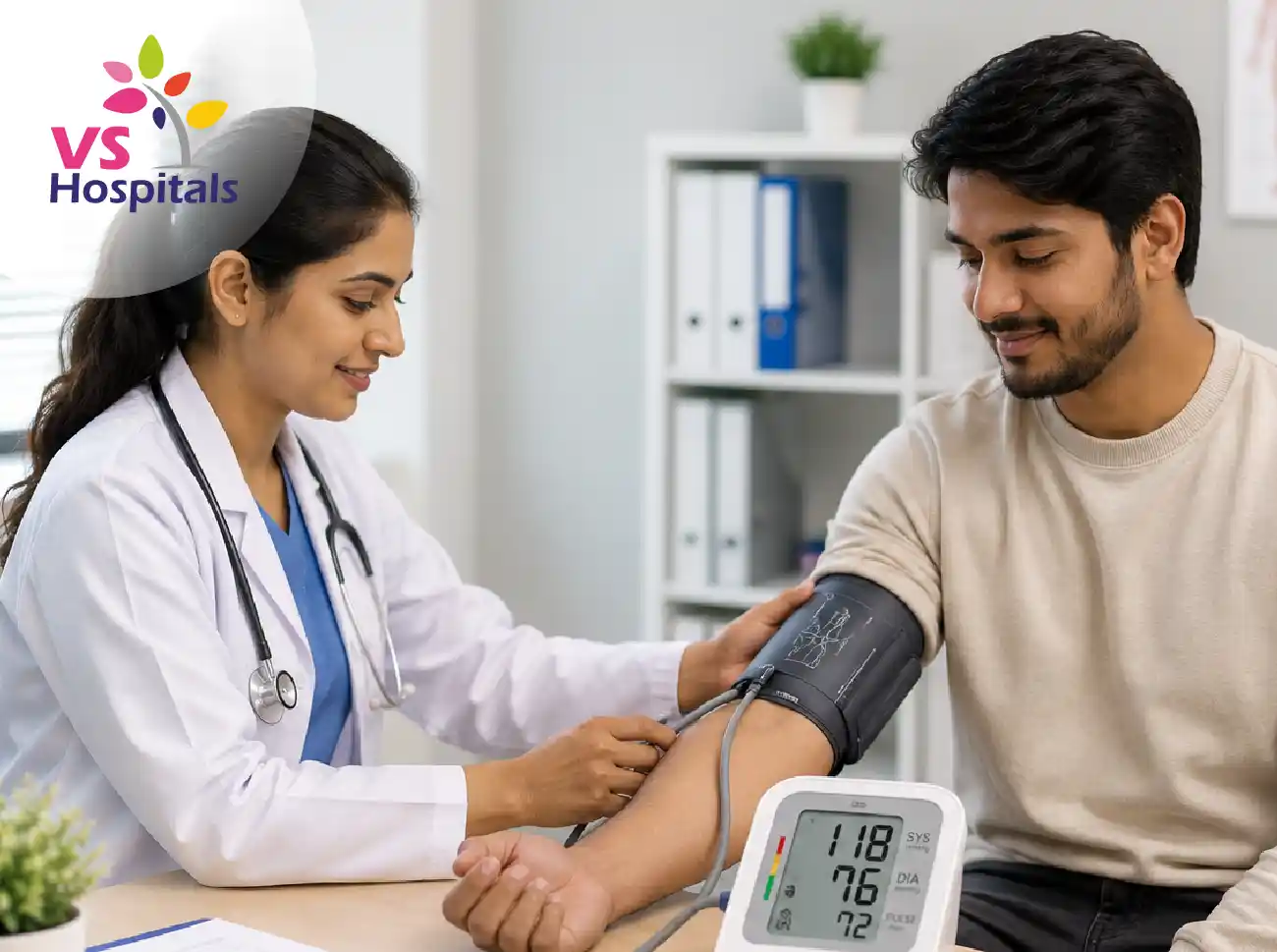
Seek emergency medical care immediately if:
- Body temperature crosses 104°F
- The person becomes confused
- Breathing difficulty develops
- Seizures occur
- The person faints
- Symptoms worsen quickly
Delaying treatment increases the risk of organ damage and death.
How To Prevent Heat Stroke
Heat stroke is largely preventable with proper precautions.
Daily Prevention Tips
- Drink enough water regularly
- Avoid direct sunlight during afternoon hours
- Wear loose cotton clothes
- Use umbrellas or caps outdoors
- Take regular breaks while working
- Consume ORS or electrolyte drinks
Summer Safety Tips
For Children
- Keep them hydrated
- Avoid outdoor play during peak heat
For Outdoor Workers
- Take shade breaks
- Avoid overexertion
For Elderly People
- Stay in cool indoor spaces
- Use fans or air conditioning
Best Drinks to Prevent Heat Stroke
Hydration is essential during summer.
Recommended Drinks
- Water
- Coconut water
- ORS solution
- Buttermilk
- Lemon juice
- Fresh fruit juices
Avoid excessive caffeine and alcohol because they increase dehydration.
Heat Stroke Symptoms in Children
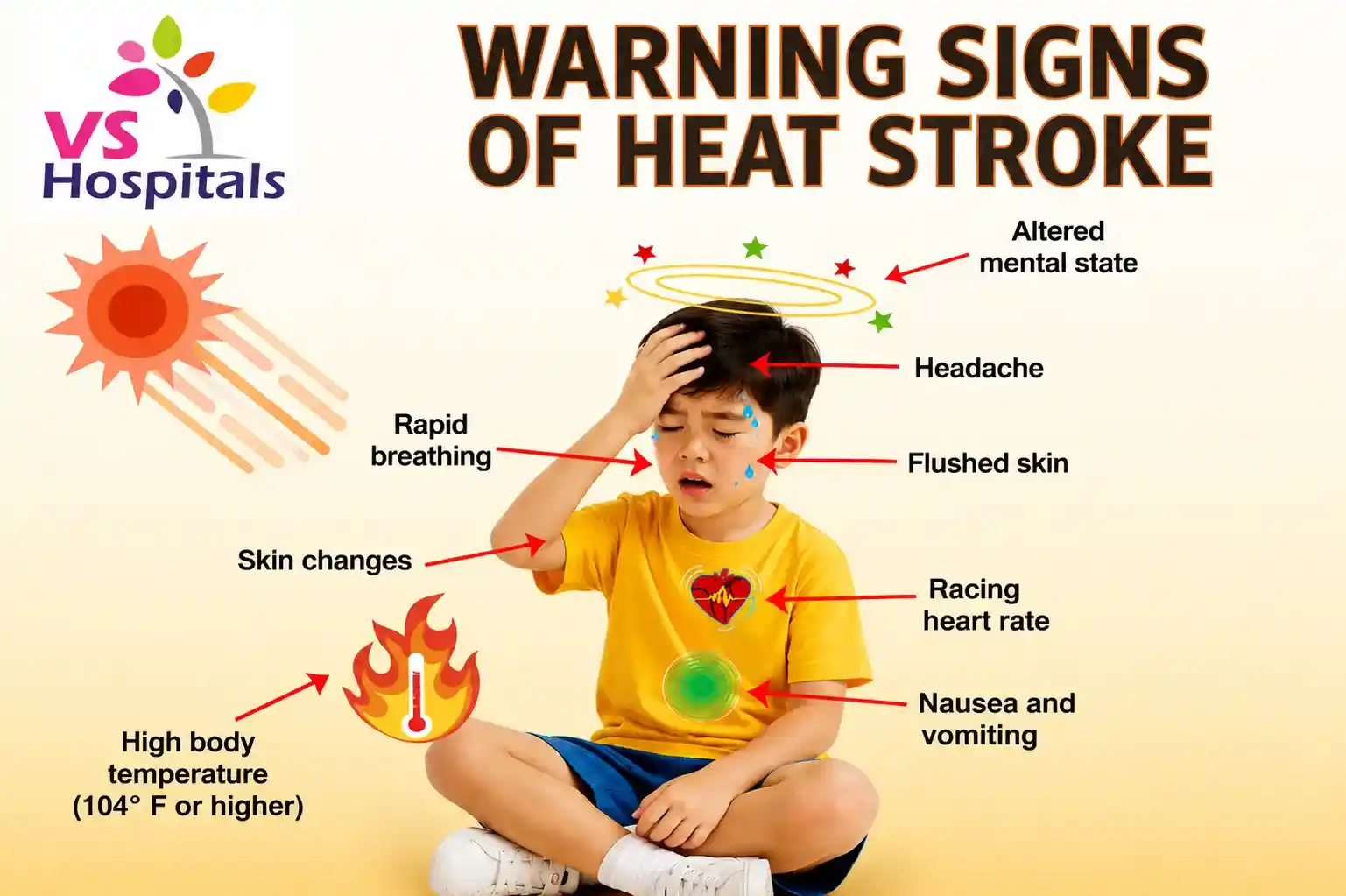
Children are highly sensitive to extreme temperatures.
Symptoms in Children
- Irritability
- Continuous crying
- Vomiting
- High fever
- Weakness
- Dry mouth
- Reduced urination
Parents should seek medical help immediately if symptoms worsen.
Heat Stroke Symptoms in Elderly People
Older adults may not feel thirsty quickly, increasing dehydration risk.
Common Symptoms
- Confusion
- Weakness
- Dizziness
- Fainting
- Rapid heartbeat
- Difficulty walking
Elderly individuals living alone during summer require extra monitoring.
Can Air Conditioning Prevent Heat Stroke?
Yes, staying in cool indoor environments can reduce the risk of heat stroke.
Air conditioning helps:
- Lower body temperature
- Prevent overheating
- Improve comfort during heat waves
However, hydration is still important even when staying indoors.
Heat Stroke Recovery Tips
Recovery may take days or weeks depending on severity.
Recovery Recommendations
- Rest completely
- Drink fluids regularly
- Avoid direct sunlight
- Follow doctor instructions
- Avoid intense exercise temporarily
Some severe cases may require hospitalization.
Complications of Untreated Heat Stroke
Without treatment, heat stroke can damage major organs.
Possible Complications
- Brain damage
- Kidney failure
- Heart complications
- Muscle breakdown
- Organ failure
- Death
This is why early recognition is critical.
Conclusion
Heat stroke is one of the most dangerous summer health conditions, especially during extreme heat waves. Understanding the symptoms early can help prevent serious complications and save lives.
If someone develops confusion, fainting, seizures, or extremely high body temperature during hot weather, immediate medical attention is necessary. Quick cooling, hydration, and emergency treatment are the most important steps.
By staying hydrated, avoiding excessive sun exposure, and recognizing early warning signs, heat stroke can often be prevented effectively.