


Cancer is not always accompanied by severe pain or obvious symptoms in its early stages. Often, it begins with subtle changes that are easy to overlook or dismiss as everyday health concerns. A persistent cough may be mistaken for a lingering infection. Unexplained fatigue may be attributed to stress. A painless lump may not seem alarming at first.
However, these seemingly minor changes can sometimes be the body’s way of signaling that something needs medical attention. Early diagnosis remains one of the most effective ways to improve cancer treatment outcomes and survival rates. Src: (WHO)
Understanding the early signs of cancer does not mean assuming that every symptom is cancer. Instead, it helps you recognize when a symptom has persisted long enough to warrant further evaluation and when it is time to consult an oncologist.
Why Is Early Detection So Important?
Cancer develops when abnormal cells grow uncontrollably and begin damaging healthy tissues. During the initial stages, these changes are often limited to one area of the body, making treatment considerably more effective. As the disease progresses, cancer cells may spread to nearby organs or distant parts of the body, making treatment more complex.
This is why doctors emphasize early diagnosis. Detecting cancer before it spreads often allows for more treatment options, less extensive procedures, and significantly better long-term outcomes. It is explained that many cancers can be successfully managed when identified early through prompt evaluation and appropriate treatment. Src: (NCI)
What Are the Early Signs of Cancer?
The symptoms of cancer depend on the organ involved, which means there is no single warning sign that applies to every type of cancer. Nevertheless, there are several symptoms that should not be ignored if they persist without an obvious explanation.
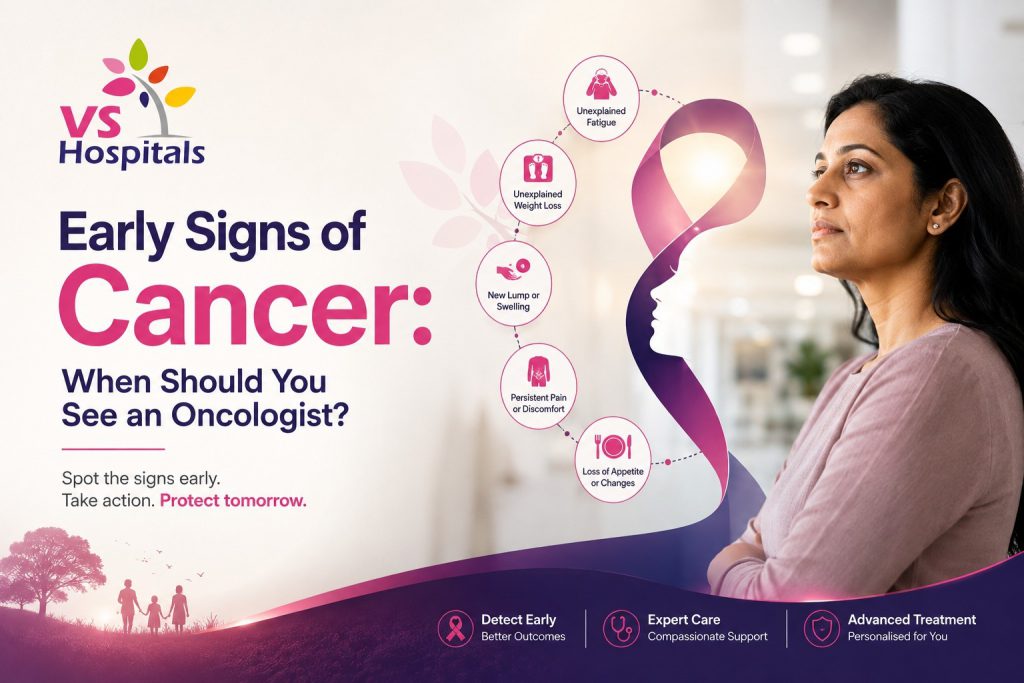
Persistent fatigue that does not improve with adequate rest, unexplained weight loss, a lump anywhere in the body, recurring pain, prolonged cough, difficulty swallowing, changes in bowel or bladder habits, blood in the stool or urine, non-healing ulcers, or noticeable changes in moles are among the most common early warning signs.
These symptoms are not exclusive to cancer and may occur because of infections, inflammatory conditions, or other non-cancerous illnesses. However, when they continue for several weeks or progressively worsen, they deserve proper medical evaluation rather than self-treatment.
It is advised to seek medical attention whenever unusual symptoms persist or continue to recur without a clear explanation. Src:(Mayo Clinic)
When Should You Become Concerned?
Many people wait until symptoms become severe before consulting a doctor. Unfortunately, this delay can postpone diagnosis.
A symptom deserves attention when it is persistent, unexplained, or progressively worsening. For example, a cough lasting more than three weeks without improvement, repeated blood in the stool, difficulty swallowing, unexplained bleeding after menopause, or a lump that continues to grow should never be ignored.
Similarly, losing weight without changing your diet or exercise routine is not considered normal. Although several medical conditions can cause weight loss, unexplained weight loss is recognized as an important symptom that requires further evaluation.
Rather than attempting to diagnose yourself online, it is always safer to seek professional medical advice.
Who Is More Likely to Develop Cancer?
Cancer can affect anyone, but certain factors increase the likelihood of developing the disease over time.
Age remains one of the strongest risk factors because genetic changes accumulate naturally over the years. Tobacco use, excessive alcohol consumption, obesity, physical inactivity, prolonged sun exposure, unhealthy dietary habits, certain viral infections such as Human Papillomavirus (HPV), and a family history of specific cancers can also increase risk.
When Is the Right Time to See an Oncologist?
Many people believe an oncologist should only be consulted after cancer has already been diagnosed. In reality, oncologists often become involved much earlier in the patient’s journey.
If imaging tests reveal a suspicious growth, a biopsy suggests abnormal cells, or your physician believes specialized evaluation is necessary, consulting an oncologist allows further investigation and treatment planning.
Individuals with a strong family history of inherited cancers may also benefit from consulting an oncologist for risk assessment, genetic counseling, and personalized screening recommendations.
An oncologist works closely with surgeons, radiologists, pathologists, and other specialists to ensure that every diagnosis is accurate before treatment decisions are made.
How Is Cancer Diagnosed?
Cancer diagnosis usually begins with a detailed medical history and physical examination. Based on your symptoms, your doctor may recommend blood tests, imaging studies such as ultrasound, CT scan, MRI, or PET-CT, and specialized procedures like endoscopy.
However, the most important investigation remains the biopsy, where a small sample of tissue is examined under a microscope. A biopsy confirms whether abnormal cells are cancerous and helps determine the exact type of cancer. Biopsy is considered the golden standard for confirming most cancer diagnoses. Src: (NCI)
Can Cancer Be Detected Before Symptoms Appear?
Yes. This is one of the greatest advantages of cancer screening.
Several cancers develop slowly over many years before causing noticeable symptoms. Regular screening can detect precancerous changes or identify cancer during its earliest stages.
| Cancer Type | Recommended Screening |
| Breast Cancer | Mammography |
| Cervical Cancer | Pap Smear and HPV Test |
| Colorectal Cancer | Colonoscopy or Stool-Based Screening |
| Lung Cancer (High-Risk Individuals) | Low-Dose CT Scan |
| Prostate Cancer | PSA Testing in Selected Individuals |
Can Cancer Be Prevented?
Although not every cancer is preventable, many cases can be avoided by adopting healthier lifestyle habits. Avoiding tobacco, maintaining a healthy body weight, exercising regularly, eating a balanced diet, limiting alcohol consumption, protecting the skin from excessive sunlight, receiving recommended vaccinations, and participating in regular screening programs all contribute to lowering cancer risk.
Prevention and early diagnosis work together. While healthy habits reduce the likelihood of developing cancer, screening increases the chances of finding cancer before symptoms appear.
Recognizing Early Signs Could Change the Course of Treatment
The human body often provides early clues when something is not right. While most symptoms do not turn out to be cancer, persistent changes should never be ignored or dismissed without medical evaluation. Understanding the early signs of cancer, knowing your personal risk factors, and seeking timely medical advice can lead to earlier diagnosis, more treatment options and better long-term outcomes.
At VS Hospitals, our multidisciplinary oncology team combines advanced diagnostics, precision oncology, evidence-based treatment, and compassionate patient care to support individuals at every stage of their cancer journey. Whether you require screening, a second opinion, or comprehensive cancer treatment, timely intervention can make all the difference.