



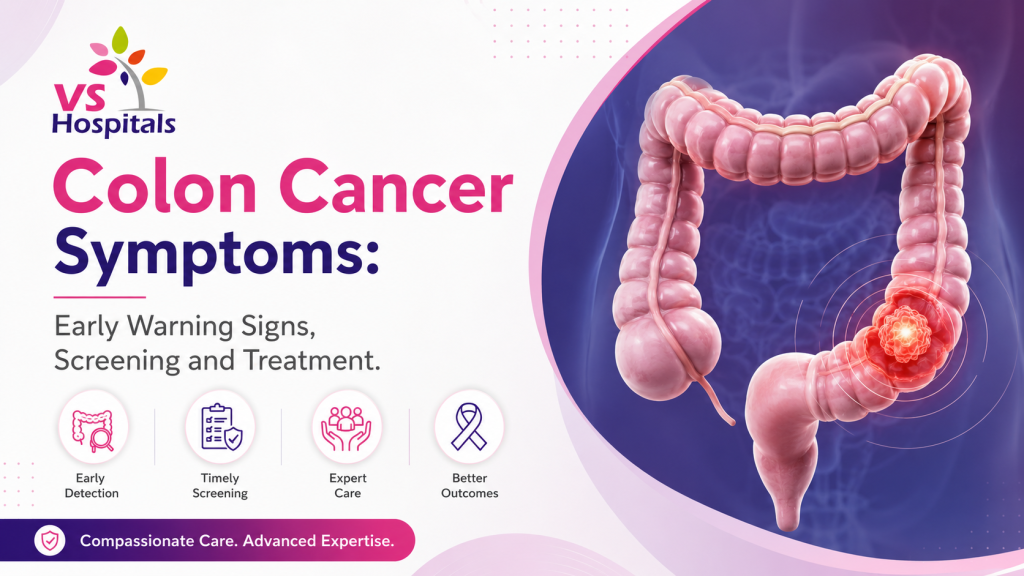
Colon cancer is one of the most common cancers worldwide, yet it is also among the most preventable and treatable when detected early. The challenge is that colon cancer symptoms often develop gradually and may be mistaken for common digestive issues such as constipation, piles (hemorrhoids), or irritable bowel syndrome (IBS). In its early stages, the disease may not cause any symptoms at all.
Recognizing warning signs, understanding who is at risk, and undergoing timely colon cancer screening can make a significant difference. According to the National Cancer Institute (NCI), early detection significantly improves treatment outcomes and survival rates for colorectal cancers. (src: NCI)
Colon cancer develops in the large intestine (colon), which forms the final part of the digestive system. It usually begins as small, non-cancerous growths called polyps (abnormal tissue growths). While most polyps are harmless, some may gradually develop into cancer over several years if left untreated.
Colon cancer is often grouped with rectal cancer under the term colorectal cancer, although the location and treatment approach may differ.
The American Cancer Society explains that identifying and removing precancerous polyps through screening can help prevent colon cancer from developing. (src: ACS
What Are the Early Symptoms of Colon Cancer?
One of the reasons colon cancer can be difficult to detect is that early symptoms are often mild or absent. As the disease progresses, symptoms become more noticeable.
Common colon cancer symptoms include:
- Blood in the stool (bright red or dark-coloured)
- Persistent changes in bowel habits, including diarrhea or constipation
- Narrow or pencil-thin stools
- A feeling that the bowel does not empty completely
- Persistent abdominal pain, cramps, or bloating
- Unexplained weight loss
- Fatigue or weakness caused by anemia (low red blood cell count)
These symptoms do not always indicate cancer. However, if they persist for more than two weeks or frequently recur, they should be evaluated by a doctor.
When Should You Worry About Colon Cancer Symptoms?
Occasional digestive discomfort is common. However, certain symptoms require prompt medical attention.
You should consult a healthcare professional if you experience:
- Rectal bleeding that continues or recurs
- Blood mixed with stool
- Persistent abdominal pain
- Ongoing constipation or diarrhea without a clear cause
- Unexplained weight loss
- Iron deficiency anemia without an obvious reason
- A family history of colorectal cancer along with digestive symptoms
Who Is at Higher Risk of Developing Colon Cancer?
Although colon cancer can occur in younger adults, the risk increases with age.
Factors that increase risk include:
- Age above 45 years
- Family history of colon or colorectal cancer
- Personal history of colon polyps
- Inflammatory bowel diseases such as Crohn’s disease or ulcerative colitis
- Obesity
- Smoking
- Excessive alcohol consumption
- Diet high in processed or red meat
- Physical inactivity
- Type 2 diabetes
Lifestyle modifications and regular screening can significantly reduce the risk of colorectal cancer.
Why Is Colon Cancer Screening So Important?
Unlike many cancers, colon cancer often develops slowly from polyps over several years. Screening helps detect these polyps before they become cancerous or identifies cancer at an early stage when treatment is more effective.
Common Colon Cancer Screening Tests
| Screening Test | Purpose |
| Colonoscopy | Examines the entire colon and allows removal of polyps during the procedure |
| Stool-based tests (FIT or FOBT) | Detect hidden blood in stool |
| Stool DNA test | Detects abnormal DNA associated with colorectal cancer |
| CT Colonography | Uses specialized imaging to examine the colon |
The United States Preventive Services Task Force (USPSTF) recommends routine colorectal cancer screening for adults beginning at 45 years of age, with earlier screening for individuals at higher risk. (src: USPSTF)
How Is Colon Cancer Diagnosed?
If screening results or symptoms raise concern, your doctor may recommend further evaluation.
Diagnosis may involve:
- Colonoscopy with biopsy (removal of a tissue sample for examination)
- CT scan or MRI to assess the extent of disease
- Blood tests, including tumor markers in selected cases
- PET scan when clinically indicated
After diagnosis, the cancer is staged to determine how far it has spread. This helps guide treatment planning.
What Are the Treatment Options for Colon Cancer?
Treatment depends on the stage of the cancer, its location, and the patient’s overall health.
Common treatment options include:
Surgery
Surgery is often the primary treatment for early-stage colon cancer and involves removing the cancerous portion of the colon along with nearby lymph nodes.
Chemotherapy
Chemotherapy uses medicines to destroy cancer cells and may be recommended before or after surgery, depending on the stage.
Targeted Therapy
Targeted therapy focuses on specific molecules involved in cancer growth and may be used for advanced disease.
Immunotherapy
Some patients with specific genetic characteristics may benefit from immunotherapy, which helps the body’s immune system recognize and attack cancer cells.
Can Colon Cancer Be Prevented?
Although not every case can be prevented, healthy lifestyle choices can lower the risk.
Tips to Reduce Your Risk
- Eat a diet rich in fruits, vegetables, and whole grains
- Limit processed and red meat consumption
- Exercise regularly
- Maintain a healthy body weight
- Avoid smoking
- Limit alcohol intake
- Attend recommended screening appointments
Early screening remains one of the most effective ways to prevent colon cancer by identifying and removing precancerous polyps.
Early Detection Saves Lives
Colon cancer often develops silently, making awareness and timely screening essential. Paying attention to colon cancer symptoms, understanding your personal risk, and undergoing regular screening can help detect the disease before it progresses. When diagnosed early, treatment is often more effective and outcomes are significantly better.
At VS Hospitals, our multidisciplinary team of gastroenterologists, surgical oncologists, medical oncologists, and advanced diagnostic specialists provides comprehensive care for colon cancer from screening and accurate diagnosis to personalized treatment and long-term follow-up. Early action today can make a lasting difference to your health tomorrow.