




Diabetes is often called a “silent disease” – and for good reason. According to the International Diabetes Federation (IDF), approximately 240 million people worldwide are living with undiagnosed diabetes. In India alone, the Indian Council of Medical Research (ICMR) estimates over 101 million people have diabetes, with millions more in the pre-diabetic stage without even knowing it.
The good news? Diabetes sends warning signals long before it becomes dangerous. Recognizing these signs early can mean the difference between reversing the condition and managing a lifelong chronic illness.
Whether you have a family history of diabetes, are overweight, or simply want to stay informed – this guide is for you.
What Is Diabetes and Why Does It Happen?
Diabetes occurs when your body either doesn’t produce enough insulin (Type 1) or doesn’t use insulin effectively (Type 2). Insulin is the hormone that helps glucose from your food enter your cells for energy. When this process breaks down, sugar builds up in your bloodstream — damaging organs, nerves, and blood vessels over time.
Type 2 diabetes accounts for over 90% of all cases and is largely linked to lifestyle, diet, and genetics. The encouraging truth: Type 2 diabetes and pre-diabetes can often be prevented or reversed when caught early.
Types of Diabetes - Explained in Full
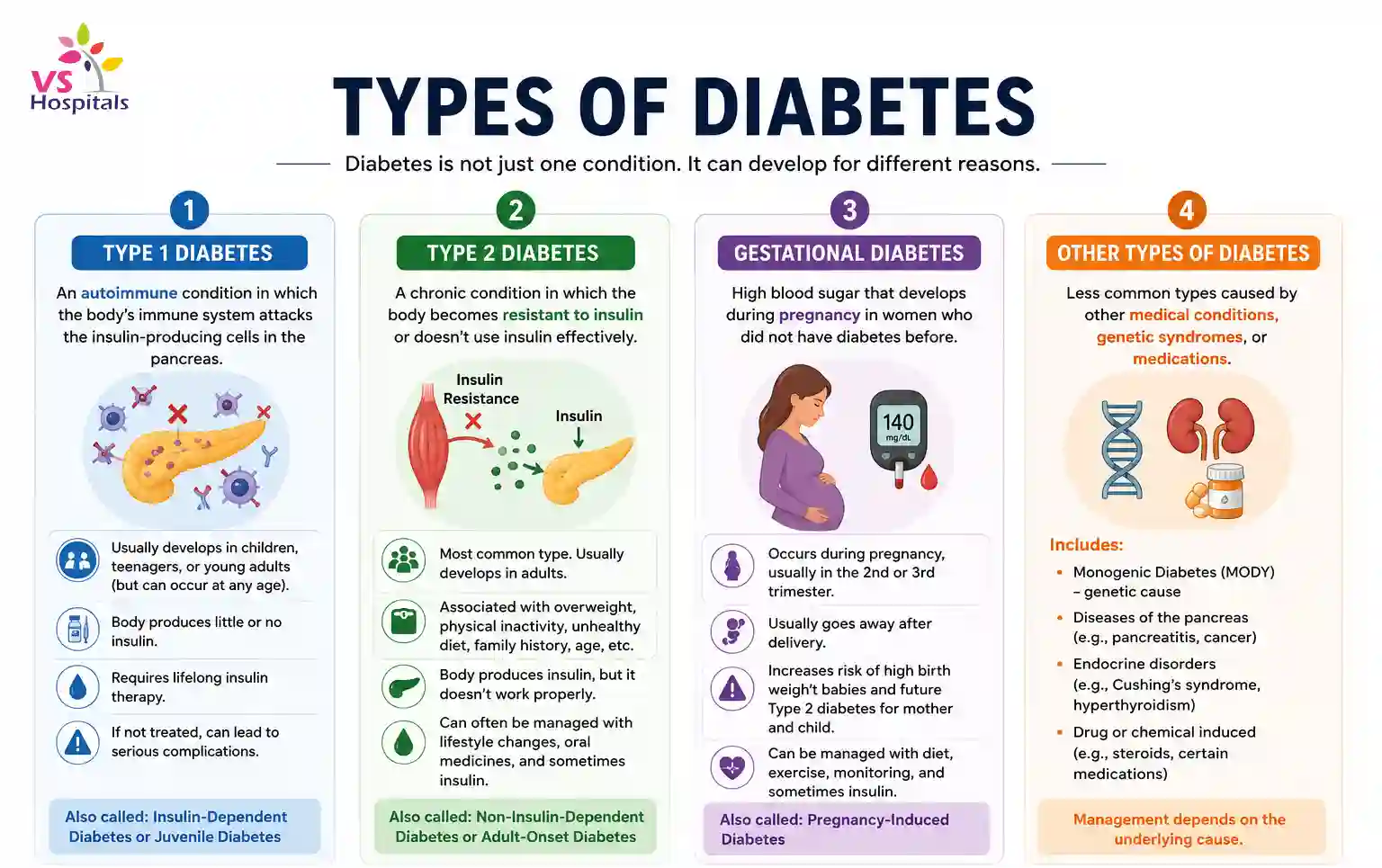
Not all diabetes is the same. Understanding which type you have (or are at risk for) is the first step toward the right treatment.
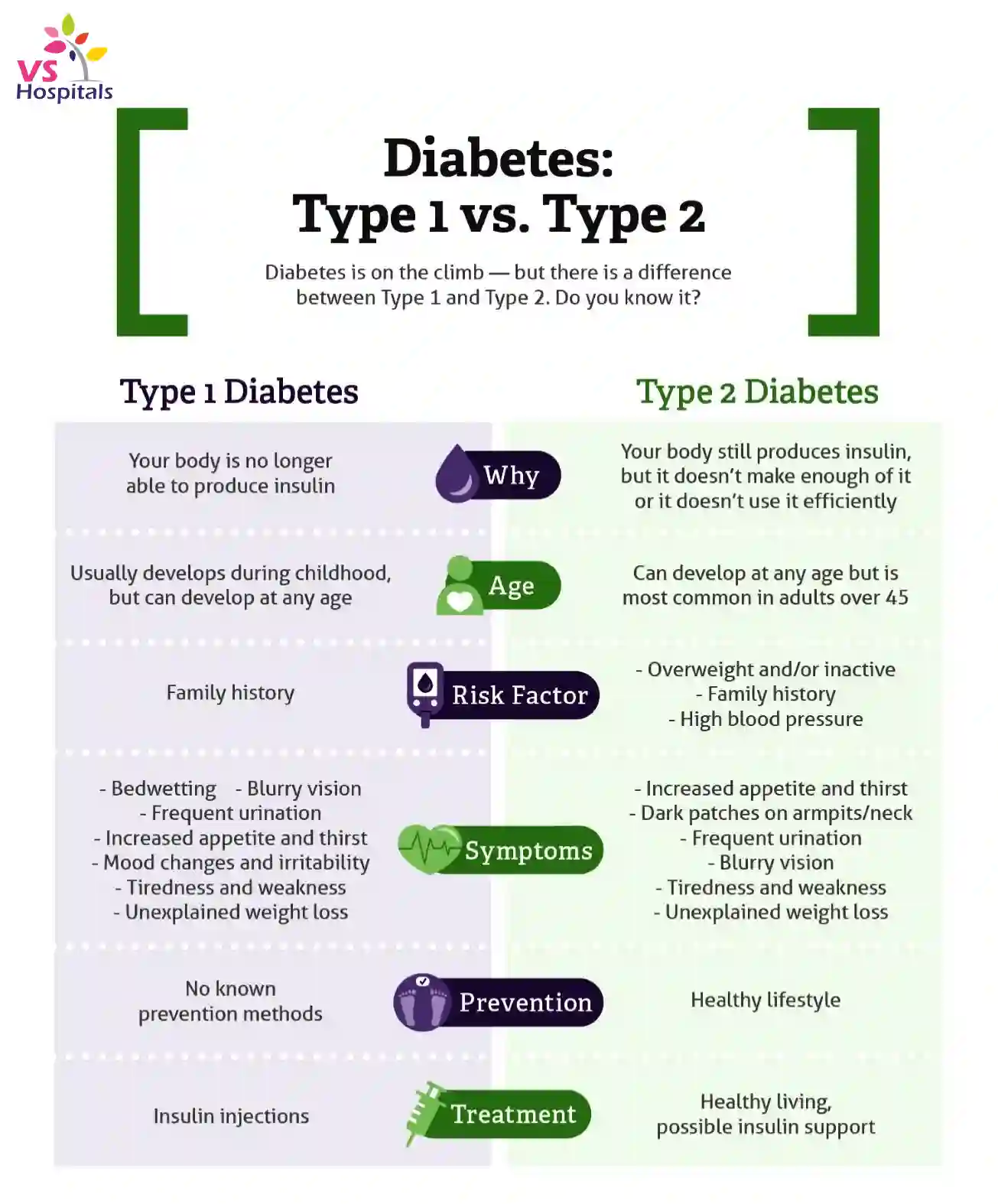
Type 1 Diabetes
An autoimmune condition where the body’s immune system mistakenly attacks and destroys the insulin-producing beta cells in the pancreas. The pancreas produces little to no insulin as a result.
Who it affects: Most commonly diagnosed in children, teenagers, and young adults — though it can occur at any age.
Key facts:
Accounts for 5–10% of all diabetes cases
Not caused by lifestyle or diet
Requires lifelong insulin therapy to survive
Onset is often sudden, with symptoms appearing rapidly over days or weeks
Common triggers: Genetic predisposition combined with environmental factors such as viral infections.
Type 2 Diabetes
The most common form. The body still produces insulin but either doesn’t produce enough, or the cells become resistant to its effects (insulin resistance). Over time, the pancreas may burn out and produce less insulin.
Who it affects: Primarily adults over 35, though it is increasingly being diagnosed in younger people and even children due to rising obesity rates.
Key facts:
Accounts for over 90% of all diabetes cases
Strongly linked to lifestyle, weight, and family history
Can be prevented, delayed, or reversed in early stages with lifestyle changes
Often has no symptoms for years — making screening critical
Gestational Diabetes
A type of diabetes that develops during pregnancy in women who did not previously have diabetes. It occurs when pregnancy hormones interfere with insulin signaling.
Who it affects: Approximately 1 in 7 pregnancies is affected by gestational diabetes globally, with Indian women being at particularly higher risk.
Key facts:
Usually resolves after delivery
Increases the risk of Type 2 diabetes later in life — by up to 50% in the mother
Can cause complications for the baby if unmanaged (large birth weight, early delivery, low blood sugar at birth)
Requires careful monitoring during and after pregnancy
Pre-Diabetes
A borderline stage where blood sugar levels are higher than normal but not yet high enough to be classified as Type 2 diabetes. Think of it as a final warning before full diabetes sets in.
Who it affects: The ICMR estimates over 136 million Indians are in the pre-diabetic stage — and most of them don’t know it.
Key facts:
No obvious symptoms in most cases
Fully reversible with diet, exercise, and weight management
Without intervention, pre-diabetes progresses to Type 2 diabetes within 5–10 years in the majority of cases
Fasting blood sugar: 100–125 mg/dL | HbA1c: 5.7–6.4%
Other Specific Types
MODY (Maturity-Onset Diabetes of the Young): A rare, inherited form caused by a single gene mutation. Often misdiagnosed as Type 1 or Type 2.
LADA (Latent Autoimmune Diabetes in Adults): A slow-progressing form of Type 1 diabetes that appears in adulthood and is frequently misdiagnosed as Type 2.
Secondary Diabetes: Caused by other conditions such as pancreatitis, hormonal disorders (Cushing’s syndrome, PCOS), or certain medications like steroids.
Stages of Diabetes — How the Disease Progresses
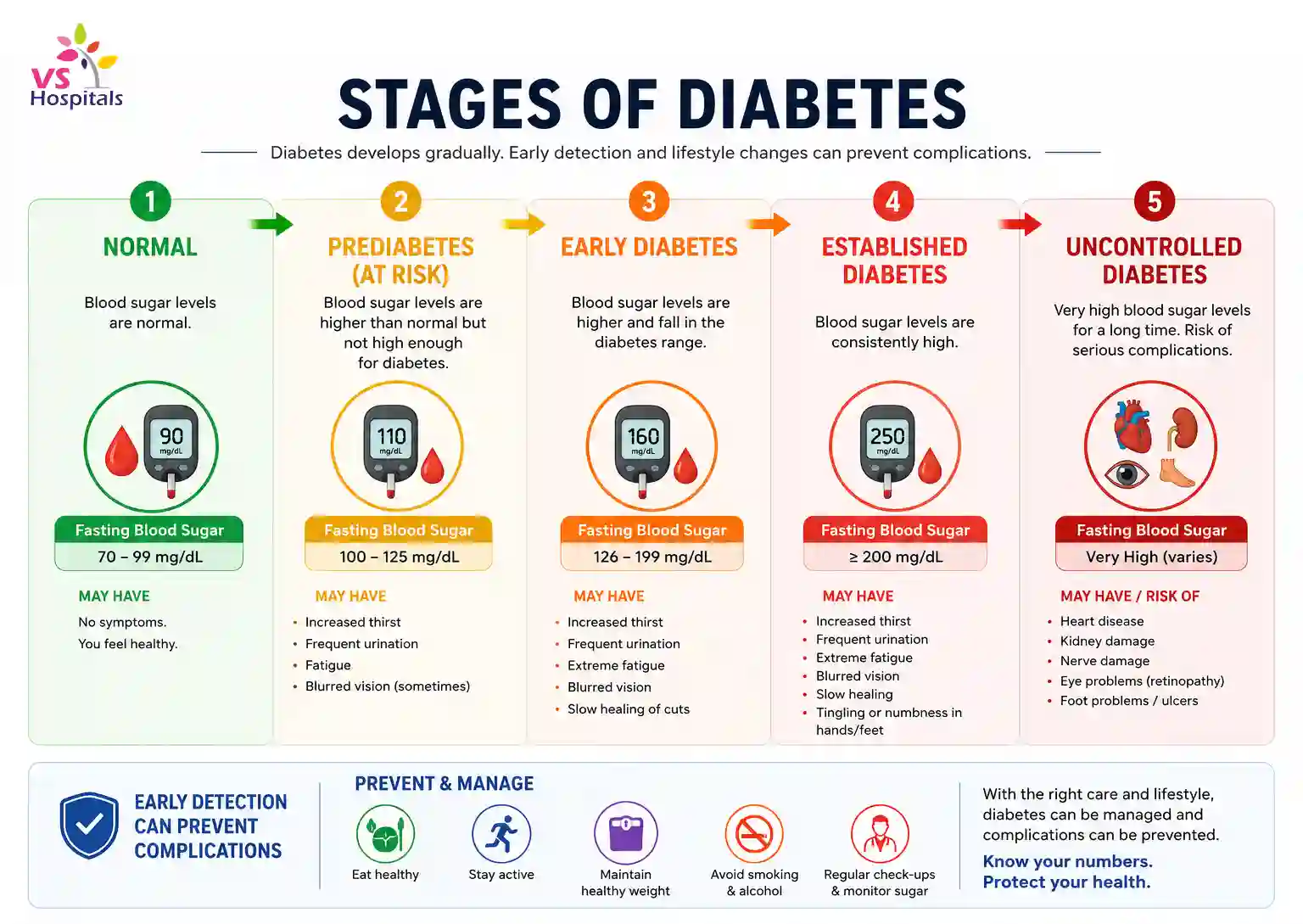
Stage 1 — Insulin Resistance (No Symptoms)
The cells in your body begin to resist insulin. Your pancreas compensates by producing more insulin to keep blood sugar levels normal. At this stage, blood sugar levels may still appear normal on standard tests.
What’s happening inside: Excess body fat — especially around the abdomen — triggers inflammation, which interferes with insulin receptors on cells. This is the silent beginning.
Action: Lifestyle changes here are most powerful. Weight loss of even 5–7% of body weight can restore insulin sensitivity and prevent progression.
Stage 2 — Pre-Diabetes (Borderline Stage)
The pancreas can no longer compensate fully. Blood sugar levels begin to rise above normal but stay below the diabetic threshold.
Fasting blood sugar: 100–125 mg/dL
HbA1c: 5.7–6.4%
OGTT (2-hour): 140–199 mg/dL
Symptoms: Mostly none. Some people notice fatigue, increased thirst, or slight blurring of vision.
Action: This stage is fully reversible. Diet, exercise, and in some cases medication (like Metformin) can bring levels back to normal.
Stage 3 — Early Type 2 Diabetes (Diagnosis Stage)
Blood sugar levels now meet the clinical threshold for Type 2 diabetes. The body can no longer maintain normal glucose regulation on its own.
Fasting blood sugar: 126 mg/dL or above
HbA1c: 6.5% or above
Random blood sugar: 200 mg/dL or above
Symptoms begin to appear: Frequent urination, increased thirst, fatigue, blurred vision, slow wound healing.
Action: Medical intervention required — lifestyle changes combined with oral medications to control blood sugar and protect organs.
Stage 4 — Established Diabetes with Complications Risk
Blood sugar remains persistently elevated over months and years. This begins to damage blood vessels and nerves throughout the body.
Complications that may begin developing:
Diabetic neuropathy — nerve damage in hands and feet
Diabetic retinopathy — early vision changes
Diabetic nephropathy — early kidney stress
Cardiovascular risk — increased risk of heart attack and stroke
Action: Intensive medical management — combination medications, regular monitoring, specialist consultations for eyes, kidneys, and heart.
Stage 5 — Advanced Diabetes with Organ Complications
Long-term, uncontrolled diabetes leads to serious, sometimes irreversible complications:
Blindness (diabetic retinopathy is the leading cause of blindness in working-age adults)
Kidney failure requiring dialysis or transplant
Diabetic foot ulcers and possible amputation
Heart disease and stroke — diabetics are 2–4 times more likely to suffer a heart attack
Severe neuropathy causing loss of sensation
Action: Multi-disciplinary specialist care — endocrinologist, nephrologist, cardiologist, ophthalmologist, and podiatrist working together. The goal shifts to slowing progression and managing quality of life.
The key message: Every stage from 1 to 4 is a chance to change the outcome. Stage 5 complications are largely preventable with timely intervention.
10 Warning Signs of Diabetes You Should Never Ignore
Frequent Urination (Polyuria)
Do you find yourself rushing to the bathroom more than usual — especially at night? When blood sugar levels are high, your kidneys work overtime to filter and absorb the excess glucose. When they can’t keep up, the glucose is excreted in your urine, pulling large amounts of fluid with it. This leads to unusually frequent urination, sometimes every hour.
What the data says: Frequent urination (more than 7 times a day or multiple times at night) is one of the earliest and most consistent signs of elevated blood sugar, reported in over 70% of newly diagnosed Type 2 diabetics in clinical studies.
Excessive Thirst (Polydipsia)
Frequent urination means your body is losing a lot of fluid — which triggers intense, unrelenting thirst. You may drink glass after glass of water and still feel dehydrated. This is your body’s distress signal. Unlike normal thirst after exercise or on a hot day, diabetes-related thirst doesn’t go away easily and keeps returning throughout the day.
Watch for: Constantly carrying water, waking up thirsty at night, or feeling dehydrated despite drinking normally.
Unexplained Weight Loss
Losing weight without trying sounds like good news — but if you haven’t changed your diet or exercise habits, it’s a red flag. When your cells can’t access glucose for energy (due to lack of insulin), your body starts breaking down fat and muscle for fuel instead. This can cause sudden, unexplained weight loss — even while you’re eating normally or more than usual.
Key stat: Unexplained weight loss of 5–10% of body weight over a few months is a documented early sign of Type 1 diabetes and, less commonly, Type 2.
Extreme Hunger (Polyphagia)
Paradoxically, even after a full meal, diabetic individuals often feel ravenously hungry. Why? Because without sufficient insulin, glucose can’t enter the cells — so your body never gets the “fuel received” signal. Your brain keeps sending hunger messages, even when you’ve eaten enough. If you feel constantly hungry — especially shortly after eating — it’s worth checking your blood sugar levels.
Blurred Vision
High blood sugar causes the lens of your eye to swell, which changes its shape and affects your ability to focus. You may notice blurry or fluctuating vision that comes and goes, or difficulty reading and recognizing faces at a distance.
Important: This is often dismissed as eyestrain or a need for new glasses. But diabetic retinopathy — damage to the blood vessels in the retina — is the leading cause of preventable blindness in working-age adults. According to the WHO, diabetic retinopathy affects approximately 1 in 3 people with diabetes globally.
Slow-Healing Wounds and Frequent Infections
Notice that a cut, bruise, or skin infection takes much longer to heal than it should? High blood sugar impairs circulation and weakens the immune system, making it harder for your body to fight bacteria and repair tissue.
Also watch for: Recurring urinary tract infections, yeast infections, or gum infections — all signs that your immune system may be compromised by uncontrolled blood sugar.
Tingling, Numbness, or Burning in Hands and Feet
Persistently high blood sugar damages the small blood vessels that supply your nerves — a condition called diabetic peripheral neuropathy. This often starts as a tingling, “pins and needles” sensation, or a burning feeling in the hands and feet, and may progress to numbness.
By the numbers: Studies show that up to 50% of people with Type 2 diabetes develop some form of neuropathy — many experiencing symptoms years before a formal diagnosis.
Fatigue and Lack of Energy
Feeling exhausted even after a full night’s sleep? Chronic fatigue is one of the most commonly overlooked signs of diabetes. When glucose can’t enter your cells efficiently, your body is essentially running on empty — regardless of how much you eat or sleep. The physical stress of managing high blood sugar, frequent nighttime urination, and dehydration all compound into severe, persistent tiredness.
This fatigue is different: It’s deep, unshakeable exhaustion that doesn’t improve with rest — and it interferes with daily life.
Darkened Skin Patches (Acanthosis Nigricans)
Look closely at the back of your neck, armpits, groin, or inner thighs. Do you notice dark, velvety patches of skin that weren’t there before? This condition, called acanthosis nigricans, is caused by high insulin levels stimulating skin cell growth. It is one of the most visible and telling early signs of insulin resistance.
Who should watch for this: Children and adults who are overweight, have a family history of diabetes, or belong to South Asian ethnic groups — who have a higher genetic predisposition to insulin resistance.
Irritability, Mood Swings, and Brain Fog
The brain is highly sensitive to changes in blood sugar. When glucose levels fluctuate — too high or too low — it directly affects your mood, concentration, and mental clarity.
People with undiagnosed diabetes often report:
- Difficulty concentrating or remembering things
- Sudden irritability or mood changes for no apparent reason
- A persistent mental “fog” that makes even simple tasks feel hard
- These neurological effects are frequently attributed to stress or sleep issues — delaying the real diagnosis by months or even years.
Are You at High Risk? Know Your Risk Factors
- Family history of diabetes (parent or sibling)
- Overweight or obese (BMI above 23 for South Asians)
- Physically inactive lifestyle
- Age above 35 (in India, risk begins earlier than in Western populations)
- Gestational diabetes during a previous pregnancy
- Polycystic ovary syndrome (PCOS)
- High blood pressure or high cholesterol
- Diet high in refined carbohydrates and sugar
- If two or more of these apply to you — even without symptoms — getting screened is the smartest thing you can do.
When Should You Get Tested?
See a doctor immediately if you:
- Experience 3 or more of the symptoms listed above
- Have a strong family history of diabetes
- Are overweight and above 35 years of age
- Have been told you had gestational diabetes
- Feel constantly fatigued without explanation
Diagnostic tests your doctor may recommend:
- Fasting Blood Glucose Test — normal is below 100 mg/dL
- HbA1c Test — reflects average blood sugar over 3 months; above 6.5% indicates diabetes
- Oral Glucose Tolerance Test (OGTT) — measures how your body processes sugar
- Random Blood Sugar Test — a quick initial check
Why Choose Vs Hospitals for Diabetes Care?
If you’re in Chennai — especially in and around Tondiarpet, Royapuram, Washermanpet, Perambur, or Kolathur — VS Hospitals is your nearest and most trusted destination for comprehensive diabetes diagnosis and management.
We Are Right Here in Your Neighbourhood
VS Hospitals is conveniently located and easily accessible for residents of Tondiarpet and North Chennai. You don’t need to travel to the city center for world-class endocrinology and diabetology care. We bring specialist-level expertise to your doorstep.
What Makes VS Hospitals Different
Dedicated Diabetology & Endocrinology Department Our team of experienced endocrinologists and diabetologists goes beyond prescribing medication. We evaluate the full picture — your lifestyle, family history, diet, complication risk, and long-term health goals — to build a care plan that’s truly yours.
Comprehensive Diabetes Screening Packages From a basic HbA1c check to a full diabetic profile including kidney function, lipid panel, eye check, and nerve assessment — we offer everything under one roof, saving you time, travel, and cost.
Advanced Diagnostics On-Site No waiting for lab results to come from outside. Our in-house diagnostics deliver fast, accurate results so your doctor can act quickly and confidently.
Diabetic Diet & Nutrition Counselling Our certified dietitians work closely with diabetic patients to create realistic, culturally appropriate meal plans — including South Indian dietary preferences — so healthy eating never feels like punishment.
Diabetic Foot Care Clinic Foot complications are among the most serious and preventable consequences of diabetes. Our specialized foot care team provides regular assessments, wound management, and education to protect your feet.
Gestational Diabetes Management Expecting mothers in Tondiarpet and surrounding areas trust VS Hospitals for careful, compassionate gestational diabetes monitoring and delivery planning — ensuring the safety of both mother and baby.
Diabetes Reversal Programme For patients with early-stage or pre-diabetes, we offer a structured, medically supervised diabetes reversal programme combining nutrition, exercise, stress management, and metabolic monitoring.
Regular Complication Screening Eyes. Kidneys. Heart. Nerves. Diabetes affects every organ. We coordinate annual screenings across specialties — ophthalmology, nephrology, cardiology, and neurology — so nothing falls through the cracks.
Patient Education & Community Outreach We believe an informed patient is a healthier patient. VS Hospitals regularly conducts free diabetes awareness camps and health talks in Tondiarpet and surrounding communities — because prevention is always better than cure.
Affordable Care, No Compromise on Quality We understand that managing diabetes is a long-term commitment. Our pricing is designed to be accessible to families across North Chennai — because excellent diabetes care should not be a privilege.
Book Your Diabetes Screening at Vs Hospitals, Tondiarpet
Our expert diabetology team at VS Hospitals is ready to guide you — whether you’re newly diagnosed, managing long-term diabetes, or simply want to know your risk.
Call us to book your appointment today.
VS Hospitals – Serving Tondiarpet, Royapuram, Washermanpet & all of North Chennai
Early detection. Expert care. Better outcomes – right in your neighborhood.
Conclusion
Diabetes doesn’t announce itself loudly. It creeps in quietly — through a little extra thirst, a bit more fatigue, a wound that takes longer to heal. These are not random inconveniences. They are your body asking for help.
Understanding the types and stages of diabetes, recognizing the 10 warning signs, and knowing where to go for trusted care can add years — and quality — to your life.
Don’t wait for a crisis. A single blood test could change your trajectory.