


Hearing the word cancer can be scary. Many people ask the same question: why does cancer happen? The honest answer is that cancer starts when the DNA inside our cells gets damaged, and many things can add to that damage. There is rarely one single cause. Most cancers come from a mix of age, habits, the environment, infections and family genes. The good news is that you can control some of these. This guide explains the top 10 causes of cancer in simple words, the warning signs to watch for, and easy steps that can lower your risk.
What Causes Cancer?
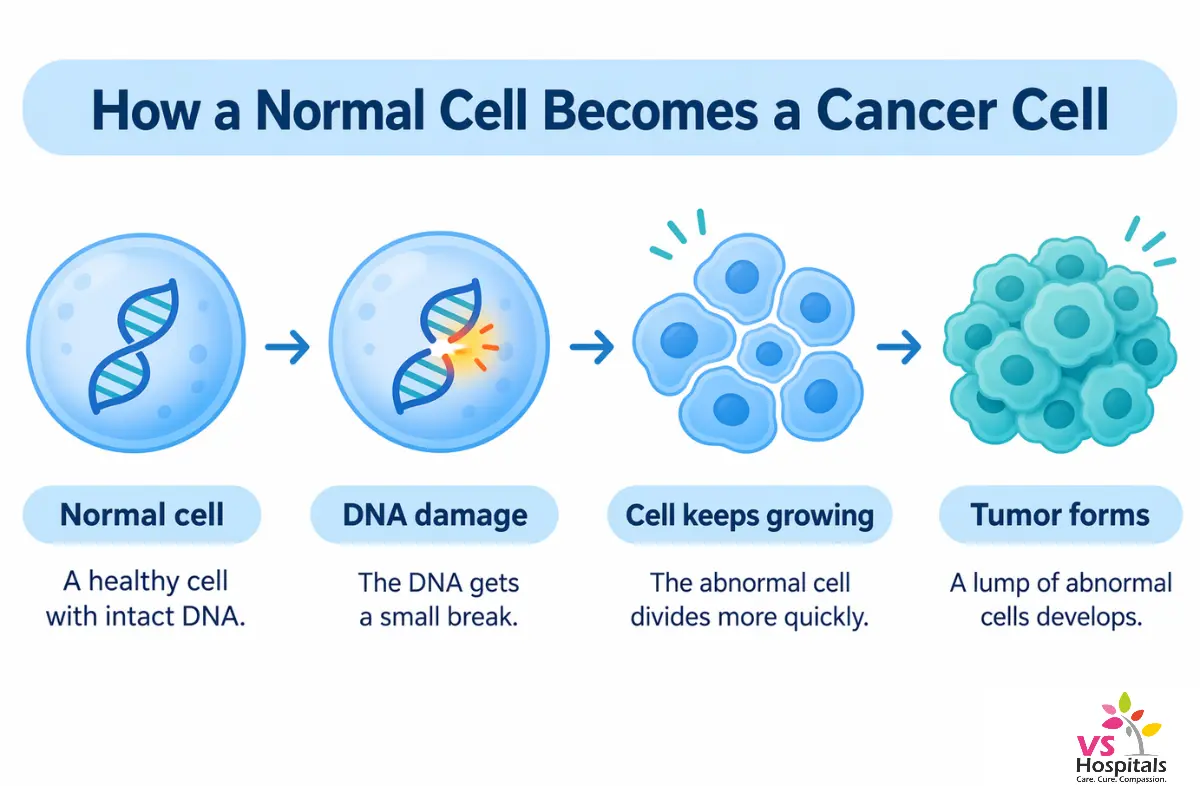
Your body is made of tiny cells. Each cell has DNA, which works like an instruction book. It tells the cell when to grow, when to divide and when to stop. Cancer begins when changes in the DNA, called mutations, damage these instructions. The cell then keeps growing when it should stop. Over time, these cells can form a lump called a tumor, or spread to other parts of the body.
Inherited Gene Changes vs Gene Changes After Birth
DNA changes happen in two ways:
- Inherited changes: Some people are born with a gene change passed down from a parent. This is why cancer sometimes runs in families. Experts say inherited changes cause about 5% to 10% of all cancers.
- Changes after birth: Most DNA changes happen during your life and are not passed on to children. Smoking, infections and strong sun rays can cause them. Sometimes they happen by chance when cells divide.
The two kinds can work together. A person with an inherited gene change may need other DNA changes later in life before cancer begins.
Having a risk factor does not mean you will get cancer. Many people with risk factors never get it, and some people with no known risk factors do. That is why doctors talk about risk and not blame.
The Top 10 Causes of Cancer
Doctors usually call these risk factors. They are things that raise the chance of cancer. Here are the ones to know.
1. Tobacco Use
Tobacco is one of the biggest causes of cancer that can be prevented. Smoking cigarettes and bidis harms the lungs, mouth, throat, food pipe, bladder and many other organs. Chewing tobacco, gutka, khaini and betel quid with tobacco are a major cause of mouth cancer in India. Breathing in someone else’s smoke can also raise the risk of lung cancer. Quitting at any age helps, and your risk keeps falling over the years.
2. Alcohol
Drinking alcohol is linked to cancers of the mouth, throat, food pipe, liver, bowel and breast. The more you drink over the years, the higher the risk. No amount is completely risk free, so the safest choice is to drink less or not at all. Drinking and smoking together raises the risk even more.
3. Overweight and Obesity
Extra body fat changes hormone levels and can cause long lasting swelling and irritation inside the body, called inflammation. This is linked to at least 13 types of cancer, including breast cancer after menopause, bowel, womb, kidney, liver and pancreas cancer. Even a small, steady weight loss can help your overall health.
4. Unhealthy Diet
What you eat matters over many years. Eating a lot of processed meat, such as sausages and bacon, is linked to bowel cancer. A diet with too few fruits, vegetables, whole grains and pulses may also raise the risk. Very oily, sugary and salty foods can lead to weight gain too. A simple plate with plenty of vegetables, fruits and whole grains is a good habit.
5. Lack of Physical Activity
Sitting for most of the day raises the risk of colon, breast and womb cancer. Being active also helps you stay at a healthy weight. Try to move your body for about 30 minutes on most days. A brisk walk counts.
6. Infections
You cannot catch cancer from another person. But some infections can raise cancer risk over time. Human papillomavirus (HPV) can lead to cervical, mouth and throat cancer. Hepatitis B and hepatitis C can lead to liver cancer. A germ called Helicobacter pylori can lead to stomach cancer. Around 1 in 10 cancers worldwide is linked to infections. Vaccines for HPV and hepatitis B, safe habits and early treatment of infections can help.
7. Too Much Sun
Strong sun rays and sunbeds can damage skin cells and cause skin cancer, including melanoma. Sunburn raises the risk the most. Stay in the shade in the middle of the day, wear light clothes that cover your skin, use a hat or umbrella, and use sunscreen when needed. Check your skin for new or changing moles.
8. Air Pollution and Harmful Chemicals
Polluted air is a known risk for lung cancer. Smoke from burning wood or coal for cooking indoors can also harm the lungs. Some workplaces expose people to chemicals and dust such as asbestos, benzene and some dyes. Radon, an invisible gas that can build up in some buildings, is another risk. Use masks and safety gear at work, keep your kitchen well aired, and follow safety rules.
9. Family History and Inherited Genes
Some families carry gene changes, such as BRCA1 and BRCA2, that raise the risk of breast, ovarian, prostate and some other cancers. If several close relatives had the same cancer, or had cancer at a young age, tell your doctor. Genetic counseling can explain your risk. Having an inherited gene does not mean you will definitely get cancer. It means you may need earlier or more regular checkups.
10. Getting Older
Cancer can happen at any age, but the risk goes up as we get older. Over the years, cells collect more DNA damage, and the body’s repair system becomes less strong. You cannot change your age, so regular health checks become more important as the years pass.
What Other Factors Can Play a Role?
Some other things can also raise the risk in certain people.
- Hormones: Some kinds of long term menopause hormone therapy can slightly raise the risk of breast cancer. Birth control pills can slightly raise the risk of breast and cervical cancer, but they lower the risk of ovarian and womb cancer. Talk to your doctor about what suits you.
- Long lasting inflammation: Some bowel conditions, such as ulcerative colitis, raise the risk of bowel cancer. Regular checks are important if you have one.
- Radiation: Doctors use X rays and CT scans only when needed, because the benefits usually outweigh the small risk.
What Are the Warning Signs of Cancer?
Signs depend on the type of cancer. Many of these signs are caused by other, less serious problems. Still, see a doctor if you notice any of these:
- A new lump or swelling anywhere in the body
- Weight loss without trying
- A cough or hoarse voice that does not go away
- Trouble swallowing
- Blood in the urine, in the stool or when coughing
- Changes in bowel or bladder habits
- A sore or ulcer that does not heal, especially in the mouth
- A mole that changes in size, shape or color
- Ongoing tiredness, fever or night sweats
- Pain that has no clear cause
A good rule is to see a doctor if a change in your body lasts for more than two weeks.
How Can You Lower Your Cancer Risk?
The World Health Organization says about 38% of cancers can be prevented by avoiding known risk factors. These steps can help:
- Do not use tobacco in any form
- Limit or avoid alcohol
- Keep a healthy weight
- Eat more vegetables, fruits and whole grains
- Stay active on most days
- Protect your skin from strong sun
- Get vaccines for HPV and hepatitis B if your doctor advises them
- Avoid smoke and harmful chemicals at home and at work
- Go for cancer screening tests as advised
Why Do Screening and Early Checks Matter?
Many cancers are easier to treat when they are found early. Screening tests look for cancer before symptoms start. Common examples are the Pap smear or HPV test for cervical cancer, mammograms for breast cancer and checks of the mouth. The right tests depend on your age, sex, health and family history. Ask your doctor which ones are right for you.
Conclusion
Cancer has many causes, and most of them work together over many years. You cannot control everything, but you can control a lot. Avoid tobacco, limit alcohol, stay active, eat well, protect your skin and get vaccinated when advised. Pay attention to changes in your body and do not wait if something does not feel right. Early advice from a doctor can bring peace of mind and, if needed, earlier treatment.
This article is for general information and awareness only. It is not a substitute for medical advice, diagnosis or treatment. Please consult a qualified doctor for your specific condition.